
Search
Remove Ads
Advertisement
Search Results

Definition
Nefertiti
Nefertiti (c. 1370 - c. 1336 BCE) was the wife of the pharaoh Akhenaten of the 18th Dynasty of Egypt. Her name means, `the beautiful one has come' and, because of the world-famous bust created by the sculptor Thutmose (discovered in...

Definition
Roman Engineering
The Romans are known for their remarkable engineering feats, be they roads, bridges, tunnels, or their impressive aqueducts. Their constructions, many of them still standing, are a testament to their superior engineering skills...

Definition
Persian Immortals
The Ten Thousand Immortals were the elite force of the Persian army of the Achaemenid Empire (c. 550-330 BCE). They formed the king's personal bodyguard and were also considered the shock troops of the infantry in Persian warfare...

Definition
Giovanni Bellini
Giovanni Bellini (c. 1430-1516 CE) was an Italian Renaissance artist best known for his innovative use of colour, interest in light, and emphasis on brushwork. Today, Giovanni is recognised as the most innovative and influential...

Definition
Benito Mussolini - Founder of Fascism
Benito Mussolini (1883–1945) was the founder of fascism and dictator of Italy from 1922 to 1943. He led the country into a highly authoritarian regime and then dragged it into the Second World War (1939-45) on...
Definition
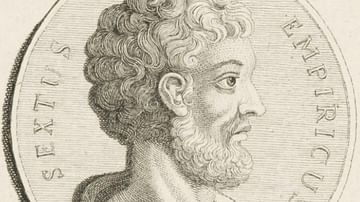
Sextus Empiricus
Sextus Empiricus (l. c. 160 to c. 210 CE) was a Greek Skeptic who developed the ideas of the earlier Greek Skeptic philosopher Pyrrho of Elis (l. c. 360 to c. 270 BCE) who claimed that tranquility of mind was attainable by suspending...

Definition
Sergei Rachmaninoff
Sergei Rachmaninoff (1873-1943) was a Russian pianist and composer best known for his piano concertos and symphonies. He overcame an early ravaging by critics and several years of depression to create works which are today...

Definition
Townshend Acts
The Townshend Acts were a series of acts passed by the Parliament of Great Britain between 1767 and 1768 to tax and regulate the Thirteen Colonies of North America. When the colonists considered the acts an abuse of power and protested...
Definition
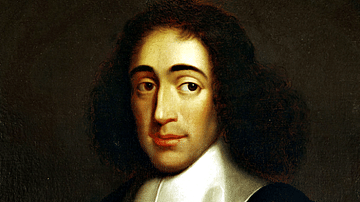
Baruch Spinoza
Baruch Spinoza (1632-1677) was a Dutch philosopher who combined rationalism and metaphysics to create a unique system of thought. Spinoza was held up as an atheist philosopher in the 18th century, but this is not an entirely accurate...

Definition
Claude Brousson
Claude Brousson (l. 1647-1698) was a prolific writer and famous preacher after the revocation of the Edict of Nantes in 1685 when Protestantism was outlawed in France. He self-exiled to Lausanne and Holland and returned to France...
