
Search
Remove Ads
Advertisement
Search Results

Definition
Theogony
The Theogony is an 8th-century BCE didactic and instructional poem, credited to the Greek poet Hesiod. The Theogony was, at first, not actually written down, rather, it was part of a rich oral tradition which only achieved written form...

Definition
Philosophy
The word philosophy comes from the Greek philo (love) and sophia (wisdom) and so is literally defined as "the love of wisdom". More broadly understood, it is the study of the most basic and profound matters of human existence. Philosophical...
Definition
Lyre
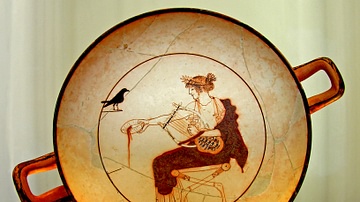
The lyre was a stringed musical instrument played by the ancient Greeks. It was probably the most important and well-known instrument in the Greek world. The lyre was closely related to the other stringed instruments: the chelys which...

Definition
Magna Graecia
Magna Graecia (Megalē Hellas) refers to the coastal areas of southern Italy which were colonized by various ancient Greek city-states from the 8th to 5th centuries BCE. Sicily, although also a region of Greek colonization, is not...

Definition
Mystras
The city of Mystras (or Mistras) in southern Greece was the provincial capital of the Byzantine Despotate of the Morea from the 13th through the 15th centuries CE. It was founded in 1249 CE by William II of Villehardouin, and it served...

Definition
Etruscan Art
The art of the Etruscans, who flourished in central Italy between the 8th and 3rd century BCE, is renowned for its vitality and often vivid colouring. Wall paintings were especially vibrant and frequently capture scenes of Etruscans...

Definition
Roman Sculpture
Roman sculpture blended the idealised perfection of Classical Greek sculpture with a greater aspiration for realism. It also absorbed artistic preferences and styles from the East to create images in stone and bronze which rank...

Definition
Hippolytus
Hippolytus is a tragedy written by Euripides (c. 484-407 BCE), one of the great Greek playwrights of the early 5th century BCE. As with many tragedies of the era, the central focus of Hippolytus is humanity's relationship with the...

Definition
Aristophanes
Aristophanes (c. 460 - c. 380 BCE) was the most famous writer of Old Comedy plays in ancient Greece and his surviving works are the only examples of that style. His innovative and sometimes rough comedy could also hide more sophisticated...
Definition
Aristotle
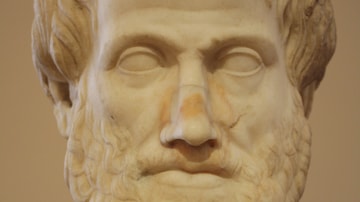
Aristotle of Stagira (l. 384-322 BCE) was a Greek philosopher who pioneered systematic, scientific examination in literally every area of human knowledge and was known, in his time, as "the man who knew everything" and later simply...
