
Search
Remove Ads
Advertisement
Search Results

Image
Greek Acroterion
An ancient Greek acroterion (akroteria) or architectural ornament made of limestone, which was placed on a flat base and positioned at the top of a building constructed in the classical style. Greece, c. 250 BCE. (Pushkin Museum...
Image
Greek Earring from Crimea
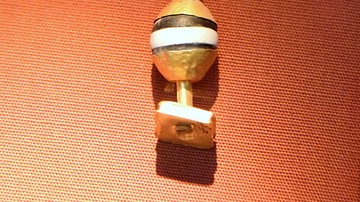
This is one of a set of two earrings. The lion-head terminal in repousse is mounted in a cone of sheet metal with embossed decoration. The loop for the ear was made from three twisted wires soldered together and merging...
Image
Gold Rosettes for Ancient Greek Clothing
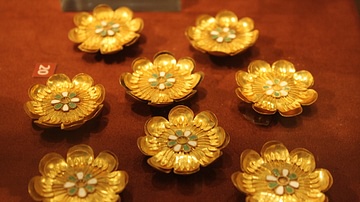
Gold and enamel rosettes used to decorate ancient Greek clothing. 4th century BCE.(National Archaeological Museum, Athens)
Image
Archaic Greek Woman
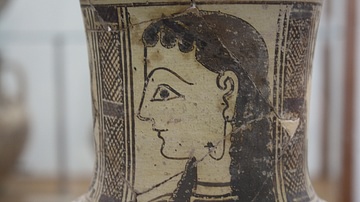
A detail from a 'Melian' vase depicting a Greek woman of the archaic period. First half of the 6th century BCE. (Mykonos Archaeological Museum)

Image Gallery
A Gallery of Monsters and Creatures of Greek Mythology
The myths and legends of ancient Greece included a wide variety of fearsome creatures and monsters, such as dragons, giants, demons, and multiformed beings like the sphinx, minotaur, centaurs, and...
Image
Greek Helmet with Myrtle Leaves
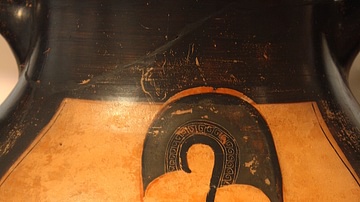
A depiction of a Greek Corinthian helmet with myrtle leaves. From an Attic black-figure pottery vessel from Phalero, 575-550 BCE. (National Archaeological Museum, Athens)
Image
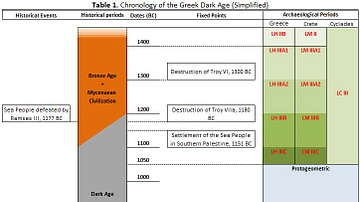
Table 1 - Chronology of the Greek Dark Age
Simplified chronology of the Greek Dark Age

Collection
The Greek Philosophers
In this collection of 20 biographies of ancient Greek philosophers, we examine the thoughts and lives of some of the most important thinkers in history. We look at the pre-Socratic philosophers and the titan trio of Socrates...
Image
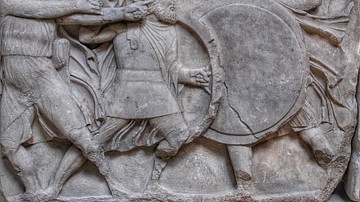
Greek Hoplites Fighting
Frieze of Greek hoplites fighting, from Nereid Monument at Xanthos in Lycia, ca. 390–380 BCE. On display at the British Museum, London.
Image
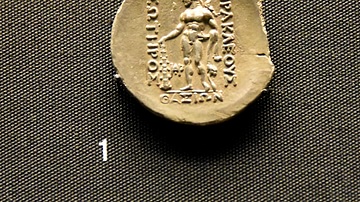
Celtic Coin Copying Greek Inscription
Early Iron Age Celtic people copied Greek coins, often faithfully reproducing their designs and inscriptions. This suggests that Thracian die-engravers were illiterate, as legible Greek letters were gradually...
