
Search
Remove Ads
Advertisement
Search Results

Definition
Phoenician Art
The art of the ancient Phoenicians, which flourished between the 19th and 4th centuries BCE, was exported throughout Mesopotamia and the ancient Mediterranean. Best known for their work on small decorative objects, Phoenician artists...

Image
Egyptian Funeral Stele
Plastered and painted funerary stele from the 7th-4th century BCE.
Egyptian Museum, Castello Sforzesco, Milan.

Image
Egyptian Hieroglyphics
Egyptian hieroglyphic inscription on wood, from the tomb of the general Horemheb. Saqqara, Egypt, c. 1300 BCE. Louvre Museum, Paris, France.

Image
Egyptian Tomb Relief
A fragment of a limestone relief from an Egyptian tomb in Memphis. 18th Dynasty, 1550-1307 BCE.
Vatican Museums, Rome.
Image
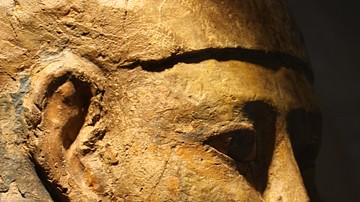
Egyptian Priest Sarcophagus
Egyptian sarcophagus of Ankh-ef-Khons, a priest of Thebes. Wood, 945-712 BCE. (Vannes Archaeological Museum, France)
Image
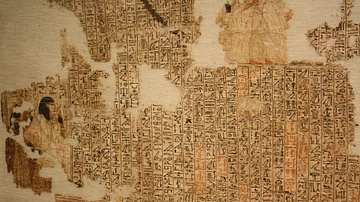
Egyptian Book of the Dead, Pashed Script
A portion of an Egyptian Book of the Dead in the hieroglyphic cursive script of Pashed. Papyrus. XVIII-XIX Dynasty. (Archaeological Museum, Milan, Italy)

Image
Egyptian God Osiris
Small statue of Osiris.
Staatliches Museum Ägyptischer Kunst (State Museum of Egyptian Art), Munich.
Image
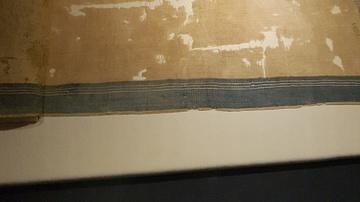
Egyptian Linen
A portion of Egyptian linen. Linen was the most common fabric used by embalmers to wrap the body, often in vast quantities. The woven blue bands on this piece suggest that it once formed part of a garment. New Kingdom to Late Period...

Image
Ancient Egyptian Funeral Painting
Ancient Egyptian tomb painting depicting workmen bringing offerings to a funeral, from the tomb of Nebamun and Ipuky, Thebes, New Kingdom of Egypt (c. 1570 to c. 1069 BCE), 18th Dynasty, c. 1400 BCE. Royal Ontario...

Image
Egyptian Model Soul House
Egyptian soul house, 12th Dynasty, about 1985-1795 BCE. Provenance unknown. The British Museum, (photo taken at the Powerhouse Museum, Sydney, Australia) Model houses placed in tombs were another way to ensure the...
