
Search
Remove Ads
Advertisement
Search Results

Article
Mongol Multiculturalism
The Mongol Empire accepted and promoted many other cultures. Historians often talk about cultural exchange across Asia in the Mongol Empire as something that was just facilitated by peace and stability across such a huge...
Definition
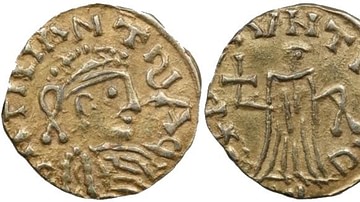
Guntram I of Orléans
Guntram I (also given as Gontrand, Gunthram, or Gunthchramn) was a Merovingian king who ruled over the Frankish kingdom of Orléans, later referred to as Burgundy, from 561 to 592. He often took on the role of mediator in the...

Definition
Cleopatra VII - The Last Great Pharaoh of Ancient Egypt
Cleopatra VII (69-30 BCE, reign 51-30 BCE) was the last ruler of Egypt before it was annexed as a province of Rome. Arguably the most famous Egyptian queen, Cleopatra was ethnically Greek as a member...

Definition
Cleopatra Selene II
Cleopatra Selene II (40 - c. 5 BCE) was a member of the Ptolemaic Dynasty who became the queen of Mauretania upon her marriage to King Juba II of Numidia (48 BCE - 23 CE). Though more obscure than her famous mother, Cleopatra...

Definition
Jianwen Emperor
The Jianwen Emperor (r. 1398-1402 CE) was the second ruler of the Chinese Ming dynasty (1368-1644 CE). Following a civil war and Jianwen's mysterious disappearance, his uncle took over the throne and ruled as the Yongle Emperor...

Definition
Ptolemy I
Ptolemy I Soter (366-282 BCE) was one of the successor kings to the empire of Alexander the Great. He served not only as king of Egypt but also the founder of the Ptolemaic Dynasty, a dynasty which included the infamous Cleopatra VII...

Definition
Michael IV the Paphlagonian
Michael IV the Paphlagonian was Byzantine emperor from 1034 to 1041 CE. He had an affair with Empress Zoe, then married her and was crowned emperor after the death of her first husband, Romanos III. He ran a competent...

Definition
Byzantine Art
Byzantine art (4th - 15th century CE) is generally characterised by a move away from the naturalism of the Classical tradition towards the more abstract and universal, there is a definite preference for two-dimensional representations...

Definition
Byzantium
The ancient city of Byzantium was founded by Greek colonists from Megara around 657 BCE. According to the historian Tacitus, it was built on the European side of the Strait of Bosporus on the order of the “god of Delphi” who said to...

Definition
Gupta Empire
The Gupta Empire stretched across northern, central and parts of southern India between c. 320 and 550 CE. The period is noted for its achievements in the arts, architecture, sciences, religion, and philosophy. Chandragupta I (320...
