
Search
Did you mean: Odin?
Remove Ads
Advertisement
Search Results

Definition
Ambiorix
Ambiorix (c. 54/53 BCE) was the co-ruler of the Eburone tribe of Gallia Belgica (north-eastern Gaul, modern-day Belgium) who led an insurrection against Caesar's occupying forces in Gaul in the winter of 54/53 BCE. Nothing is known...

Definition
Ehecatl
Ehecatl was a Mesoamerican god of air and winds, especially those which brought rains. Regarded as a manifestation of the great feathered serpent god Quetzalcoatl, he was sometimes known as Quetzalcoatl-Ehecatl, in which guise he helped...

Definition
Mosaic
Mosaics are designs and images created using small pieces (tesserae) of stone or other materials which have been used to decorate floors, walls, ceilings, and precious objects since before written records began. Like pottery, mosaics...

Definition
Kamakura Period
The Kamakura Period or Kamakura Jidai (1185-1333 CE) of medieval Japan began when Minamoto no Yoritomo (1147-1199 CE) defeated the Taira clan at the Battle of Dannoura in 1185 CE. The period is named after Kamakura, a coastal...

Definition
Lycia
Lycia is a mountainous region in south-west Anatolia (also known as Asia Minor, modern-day Turkey). The earliest references to Lycia can be traced through Hittite texts to sometime before 1200 BCE, where it is known as the Lukka Lands...

Definition
Gildas
Gildas (c. 500-570 CE) was a Romano-British monk, known primarily for a work entitled De Excidio et Conquestu Britanniae, translated as On the Ruin and Conquest of Britain. Gildas' work is a polemical sermon recounting British history...
Definition
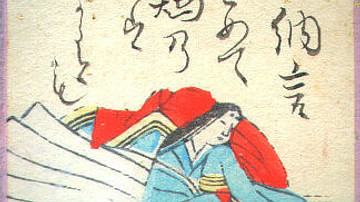
The Pillow Book
The Pillow Book (Makura no Soshi) is a personalised account of life at the Japanese court by Sei Shonagon which she completed c. 1002 CE during the Heian Period. The book is full of humorous observations (okashi) written in the...

Definition
Beowulf
Beowulf is an epic poem composed in Old English consisting of 3,182 lines. It is written in the alliterative verse style, which is common for Old English poetry as well as works written in languages such as Old High German, Old Saxon...
Definition
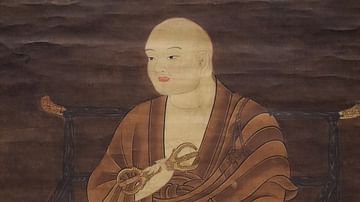
Kukai - Japan's Founder of Shingon Buddhism
Kukai or Kobo Daishi (774-835 CE) was a scholar, poet, and monk who founded Shingon Buddhism in Japan. The monk became the country's most important Buddhist saint and has been credited with all manner of minor...

Definition
Yomi
Yomi, or Yomi-tsu-kuni, is the underworld of the Shinto religion, even if it forms no part of Shinto theology and appears only in ancient myths as told in the 8th-century CE Kojiki, notably the story of the creator gods Izanami and Izanagi...
