
Search
Remove Ads
Advertisement
Search Results

Article
Fashion & Dress in Ancient Mesopotamia - From Basic to Accessorized in the Ancient World
Fashion and dress in Mesopotamia – clothing, footwear, and accessories – were not only functional but defined one's social status and developed from a simple loincloth in...

Article
Ten Ancient Persia Facts You Need to Know
Ancient Persian culture exerted a powerful influence throughout the Near East, and beyond, for over a thousand years between c. 550 BCE - 651 CE and many aspects of their culture continued to influence others...

Definition
Mesopotamian Art and Architecture - The Birth of Art and Architecture in the Ancient World
Ancient Mesopotamian art and architectural works are among the oldest in the world, dating back over 7,000 years. The works first appear in northern Mesopotamia prior...

Definition
Archimedes
Archimedes (l. 287-212 BCE) was a Greek engineer and inventor who is regarded as the greatest mathematician of antiquity and one the greatest of all time. He is credited with a number of inventions still in use today (such as the...
Definition
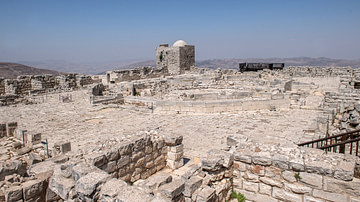
Samaritans
The Samaritans are a religious sect of ethnic Jews living near Mount Gerizim, Nablus, Hebron, and the West Bank in Israel. This community differs from mainstream Judaism by claiming that followers only accept the five books of Moses...

Article
Women in Ancient Persia
Women in ancient Persia were not only highly respected but, in many cases, considered the equals of males. Women could own land, conduct business, received equal pay, could travel freely on their own, and in the case of...

Article
Twelve Great Women of Ancient Persia
Women in ancient Persia had more rights and greater freedom than any other ancient civilization including, according to some scholars, even ancient Egypt which is famous for its respect for the feminine principle...

Definition
Faravahar
The faravahar is the best-known symbol from ancient Persia of the winged sun disk with a seated male figure in the center. It is thought to represent Ahura Mazda, the god of Zoroastrianism, but has also been interpreted to signify...

Article
Bureaucracy in the Achaemenid Empire: Learning from the Past
In the early days of the Achaemenid Empire (c. 550-330 BCE), the kings came to realise that, if they were to be able to administer the vast mass of land and the multicultural people who inhabited...
Definition
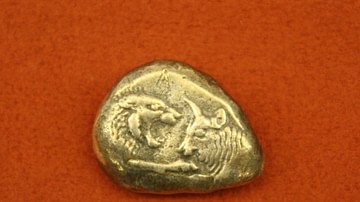
Lydia
Lydia was a region of western Asia Minor which prospered due to its natural resources and position on trading routes between the Mediterranean and Asia. The Kingdom of Lydia flourished in the 7th and 6th centuries BCE and expanded to...
