
Search
Remove Ads
Advertisement
Search Results

Image
Five Classical Orders of Serlio
A diagram showing the five classical orders as classified by the Italian Renaissance architect Sebastiano Serlio (c. 1475-1554 CE). Left to right: Tuscan, Doric, Ionic, Corinthian and Composite. From Book IV of Serlio's 'Complete Works on...

Image
Map of Celtic Peoples in the Post-Classical Period
A map showing the spread of Celtic-speaking peoples in Europe, and their migrations in the Post-Classical Period.
Image
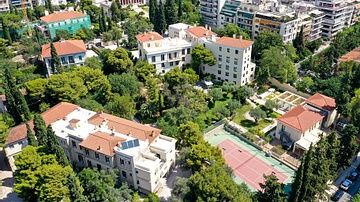
The American School of Classical Studies in Athens
Aerial Shot of the American School of Classical Studies in Athens.
Image
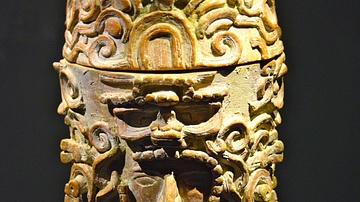
Classical Maya Incense Container
This painted incense container is made from cut stone and dates from c. 600-900 CE. Maya artisans created it in what is present-day Guatemala during the Classical era. (Musée du Cinquantenaire, Brussels)
Image
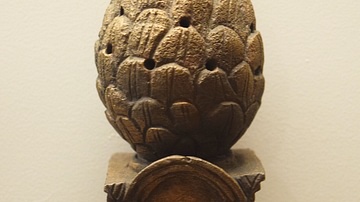
Late Classical Incense Burner from Georgia
This late classical bronze incense burner comes from Zghuderi, Georgia. It dates from c. 50-350 CE. (Georgian National Museum, Tbilisi)
Image
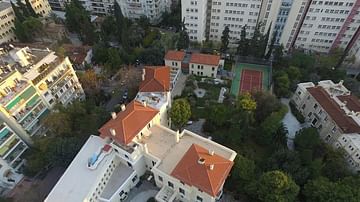
American School of Classical Studies, Athens
Aerial Shot of the American School of Classical Studies in Athens

Image
Classical Columns, Tharros.
Two standing Roman columns on Tharros, Sardinia, originally a Phoenician colony.
Definition
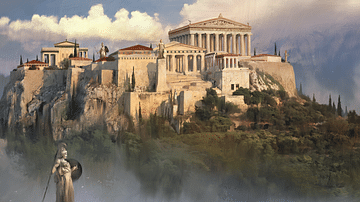
Acropolis
An acropolis is any citadel or complex built on a high hill. The name derives from the Greek akro, "high" or "extreme/extremity" or "edge", and polis, "city", translated as "high city", "city on the edge" or "city in the air", the most famous...
Article
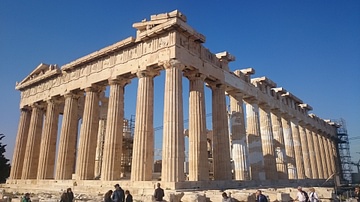
Greek World Heritage Sites
Greece, the 'cradle of western civilization', is home to a large number of spectacular sites from the ancient world, several of which have been placed on the UNESCO World Heritage List. These sites of great historical importance, interest...

Definition
Greek Archaic Period
The Greek Archaic Period (c. 800-479 BCE) started from what can only be termed uncertainty, and ended with the Persians being ejected from Greece for good after the battles of Plataea and Mykale in 479 BCE. The Archaic Period is preceded...
