
Search
Remove Ads
Advertisement
Search Results
Article
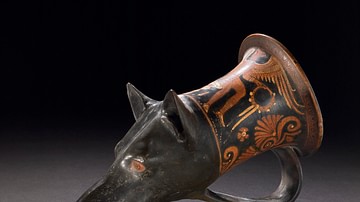
Dogs & Their Collars in Ancient Greece
Dogs in ancient Greece are regularly depicted in art, on ceramics, in literature, and other written works as loyal companions, guardians, hunters, and even as great intuitive thinkers; all of these expressing the deep admiration the Greeks...
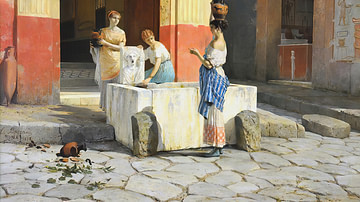
Image Gallery
A Gallery of Daily Life in Classical Antiquity
Throughout the ages, people have wondered what daily life in ancient Greece and Rome may have been like. How did people in the Classical World go about their lives, and was it really different to how we live today? We have frescoes, mosaics...

Article
A Visual Glossary of Classical Architecture
Abacus - a large slab placed above the column capital to support the architrave or an arch placed above it. Akroterion - a decorative piece added to the roof of a temple at the apex and corners, usually made of clay or bronze and often in...

Article
North Africa During the Classical Period
Phoenician traders arrived on the North African coast around 900 B.C. and established Carthage (in present-day Tunisia) around 800 B.C. By the sixth century B.C., a Phoenician presence existed at Tipasa (east of Cherchell in Algeria). From...

Definition
Renaissance Architecture
Renaissance architecture originated in Italy and superseded the Gothic style over a period generally defined as 1400 to 1600. Features of Renaissance buildings include the use of the classical orders and mathematically precise ratios of height...
Article
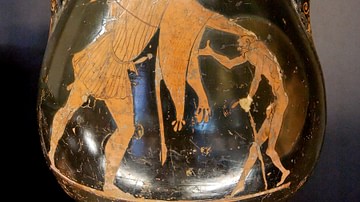
Growing Old in Ancient Greece & Rome
Although life expectancy was lower in ancient Greece and Rome, many people survived into old age. Those who reached old age tended to accumulate wealth and political power. However, the societies of the ancient Mediterranean were also often...

Article
Food & Agriculture in Ancient Greece
The prosperity of the majority of Greek city-states was based on agriculture and the ability to produce the necessary surplus which allowed some citizens to pursue other trades and pastimes and to create a quantity of exported goods so that...

Article
Ten Noble and Notorious Women of Ancient Greece
Women in ancient Greece, outside of Sparta, had almost no rights and no political or legal power. Even so, some women broke through the social and cultural restrictions to make their mark on history. All of the women did so at great personal...

Article
Sacred Cakes in Ancient Greece
Sacred cakes in ancient Greece were baked loaves, biscuits, pastries, and sponges sweetened with honey (meli) and prepared as unburnt offerings to the gods and goddesses and other divine beings. Unburnt offerings were substitutes for or a...
Article
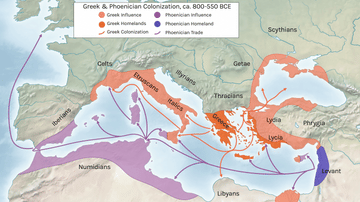
Trade in Ancient Greece
Trade was a fundamental aspect of the ancient Greek world and following territorial expansion, an increase in population movements, and innovations in transport, goods could be bought, sold, and exchanged in one part of the Mediterranean...
