
Search
Remove Ads
Advertisement
Search Results

Image
Chinese Standing Bodhisattva
This standing bodhisattva made of Sandstone comes from Cave 14 from the renown temples of Tianlongshan in China's Shanxi province. The influence from Greco-Roman art as well as South Asian art is palpable. It was made...

Image
Chinese Vessel in the Shape of a Duck and Rhyton
This beautiful vessel in the shape of a duck and rhyton comes from China's Henan province, and it was made at the Gongxian kilns during the Tang Dynasty. It is believed to have been created during the...
Definition
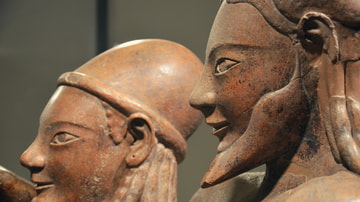
Etruscan Civilization
The Etruscan civilization flourished in central Italy between the 8th and 3rd century BCE. The culture was renowned in antiquity for its rich mineral resources and as a major Mediterranean trading power. Much of its culture...

Definition
Luoyang - Ancient Chinese Capital
Luoyang (aka Loyang) was the capital city of many ancient Chinese dynasties, a position it frequently swapped with Chang'an, usually whenever there was a change of dynasty. Located in the Henan province in the eastern...

Definition
Ghosts in the Ancient World - The Return of the So-Called Dead
A belief in an afterlife was central to every major civilization of the ancient world and this encouraged the recognition of the reality of ghosts as the spirits of the departed who, for one...

Definition
Three Kingdoms Period in Korea
The Three Kingdoms Period of ancient Korea (57 BCE – 668 CE) is so-called because it was dominated by the three kingdoms of Baekje (Paekche), Goguryeo (Koguryo), and Silla. There was also, though, a fourth entity...

Definition
Asuka Period
The Asuka Period (Asuka Jidai) of ancient Japan covers the period from 538 CE to 710 CE and, following on from the Kofun Period (c. 250-538 CE), so constitutes the latter part of the Yamato Period (c. 250-710 CE). For some scholars...
Definition
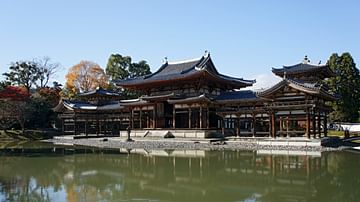
Heian Period
The Heian Period of Japanese history covers 794 to 1185 CE and saw a great flourishing in Japanese culture from literature to paintings. Government and its administration came to be dominated by the Fujiwara clan who eventually were...

Definition
Lao-Tzu
Lao-Tzu (l. c. 500 BCE, also known as Laozi or Lao-Tze) was a Chinese philosopher credited with founding the philosophical system of Taoism. He is best known as the author of the Laozi (later retitled the Tao-Te-Ching translated as “The...

Article
The Art of the Tang Dynasty
The art of the Tang Dynasty (618-907 CE) began to explore new possibilities in materials and styles with landscape painting and ceramics, in particular, coming to the fore. New techniques, a wider range of colours and...
