
Search
Remove Ads
Advertisement
Search Results

Definition
Tympanon
The tympanon (tympanum in Latin) was the most popular frame-drum in ancient Greek music, producing a loud rumbling sound not far from the sound of the orchestral timpani drums today. This percussion instrument was played mainly by women...
Definition
Basil I
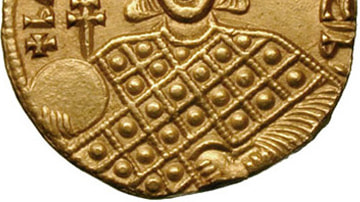
Basil I was emperor of the Byzantine Empire from 867 to 886 CE and he founded the "Macedonian" dynasty which lasted for over 200 years. Basil was an Armenian from a humble background who had risen to become the second most powerful man...

Definition
Peloponnesian War
The Peloponnesian War between Athens and Sparta and their respective allies came in two stages: from c. 460 to 446 and from 431 to 404 BCE. With battles at home and abroad, the long and complex conflict was damaging to both sides...

Definition
Gordium
Gordium was the capital of ancient Phrygia, modern Yassihüyük. It is situated on the place where the ancient Royal road between Lydia and Assyria/Babylonia crosses the river Sangarius, which flows from central Anatolia to the Black Sea...

Definition
Erebuni
Erebuni was an Urartian fortress and city, located between the Nor Aresh District and the Vardahsen District on the outskirts of present-day Yerevan, Armenia, and situated on top of Arin Berd hill. In Armenian, the fortress and archaeological...

Definition
Stone Age
From the dawn of our species to the present day, stone-made artefacts are the dominant form of material remains that have survived to today concerning human technology. The term “Stone Age” was coined in the late 19th century CE by...

Definition
Pausanias (Geographer)
Pausanias was a Greek author, historian, and geographer of the 2nd century CE who journeyed extensively throughout Greece, chronicling these travels in his Periegesis Hellados or Description of Greece. His ten volumes of...

Definition
Evliya Çelebi - The Most Famous Ottoman Traveler
Evliya Çelebi (1611 -1682/85) is the most famous Ottoman Turkish traveler and explorer. He is well-known for his ten-volume travelogue, the Seyahatnâme ('Book of Travels'), a monumental narrative of his...

Definition
Huns
The Huns were a nomadic tribe prominent in the 4th and 5th century whose origin is unknown but, most likely, they came from "somewhere between the eastern edge of the Altai Mountains and the Caspian Sea, roughly modern Kazakhstan" (Kelly...

Definition
Neanderthal
Neanderthals are an extinct group of fossil humans that appeared in Western Eurasia in the mid-Middle Pleistocene and shared the stage with the first modern humans arriving in Europe from around 45,000 years ago, before disappearing...
