
Search
Did you mean: Arapaho?
Remove Ads
Advertisement
Search Results
Image
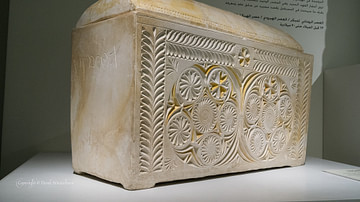
Caiaphas Ossuary
Limestone ossuary with an Aramaic inscription on the side "Joseph, son of Caiaphas," found in Jerusalem in 1990.
Israel Museum, Jerusalem.

Image
Achaemenid Lion Weight
One side of this heavy weight is inscribed in Aramaic with "correct according to the stater of silver". This probably refers to the use of a weight standard based on the silver coins known as staters. This object weighs just...
Image
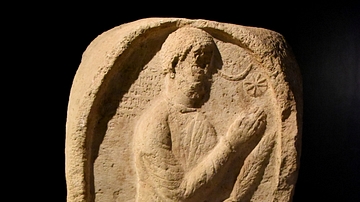
Parthian Stele from Ashur
The Aramaic inscription says that this stele was erected in the 324th year of the Seleucid calendar (12-13 CE) by Sanashu's son, Re'n-tayar, the esteemed shepherd, for the goddess Sherua. Parthian, first century CE. From...
Image
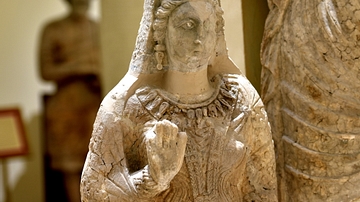
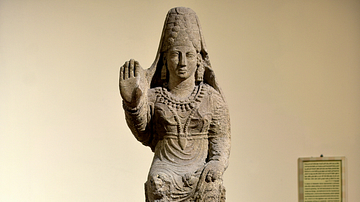
Statue of Princess Simi from Hatra
This is the upper part of the statue of Princess "Simi". Simi was the daughter of princess Doshafri, and granddaughter of king Sanatruq I (reigned c. 140 - 180 CE) through her mother. The overall depiction of the...
Image
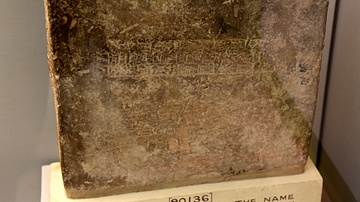
Brick Stamped with the Name of Nebuchadnezzar II
King Nebuchadnezzar II's building program at Babylon used around 15,000,000 baked bricks. Thousands bore his name and titles stamped into the clay: "Nebuchadnezzar...the eldest son of Nabopolassar, King...
Image
Statue of Abu Bint Jablo, Hatra
The Aramaic inscription on the base of the statute states that it was commissioned by Abu Bint Jablo's husband in her memory and that she was assassinated for an unknown reason under vague circumstances at the age...

Image
Coin of Bagadates
Coin of Bagadates (Persian Bagdan), third or four frataraka ruler of Persis in the 3rd century BCE. AR Tetradrachm. Obverse: Diademed head of Bagadates right, wearing kyrbasia and pendant earring. Reverse. Bagadates seated...
Image
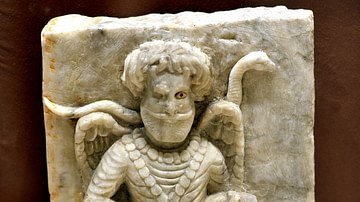
God and Goat from Hatra
Marble slab carved in raised relief, originally set into a base of an object with Aramaic inscription. It shows a winged and bearded male deity holding a dagger in his right hand and is about to slaughter a goat; he holds...
Image
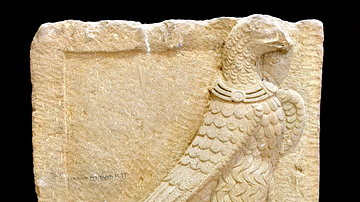
Relief of an Eagle from Hatra
The eagle was the symbol of the Hatrene army and reflects victory. There are Aramaic inscriptions below the eagle and behind his wings about certain laws in the city of Hatra. From Hatra, Ninawa Governorate, Iraq. Parthian...
Image
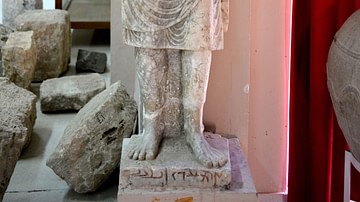
Statue of Priest Bano Abdo from Hatra
Statue of the priest Bano Abdo from Hatra. The statue’s base is inscribed with an Aramaic text. The man has a long beard and an upward-curling mustache. He looks forward and wears a long conical hat. His hands...
