
Search
Remove Ads
Advertisement
Search Results
Definition
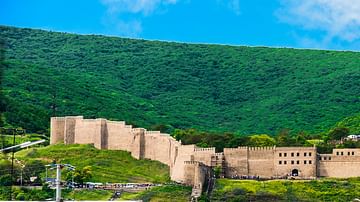
Derbent
Derbent (sometimes "Derbend" or "Darbend") is an ancient city located along the Caspian Sea in what is present-day Russia. Although the area in and around Derbent has been continuously inhabited since at least the 8th century BCE, Shah...

Definition
Tushpa
Tushpa, later known as Van, was the capital of the Urartu kingdom of ancient Armenia, eastern Turkey, and western Iran from the 9th to 6th century BCE. Located on the eastern shore of Lake Van in modern Turkey, the city was a fortress...

Definition
Constantine V
Constantine V, also known as Constantine the Dung-named by his enemies, was emperor of the Byzantine empire from 741 to 775 CE. He enjoyed military successes in the Middle East and Balkans but his reign is chiefly remembered for...

Definition
Nikephoros II Phokas
Nikephoros II Phokas was Byzantine emperor from 963 to 969 CE. Known as “White Death of the Saracens,” Nikephoros was a fearsome commander who conquered Crete, Cilicia, and much of Syria. While he is known as a great military...
Definition
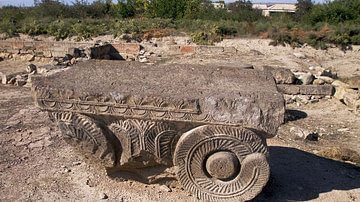
Ancient Dvin
Dvin (aka Duin), located 40 km south of modern Yerevan, was the capital of early medieval Armenia for four centuries. Founded in the 4th century CE, the city prospered and became the administrative head of the Armenian church. Remaining...

Definition
Michael II
Michael II the Amorion, also known as Michael “the Stammerer”, was emperor of the Byzantine Empire between 820 and 829 CE. He founded the short-lived Amorion dynasty, named after his hometown in Phrygia, which would last until 867...
Definition
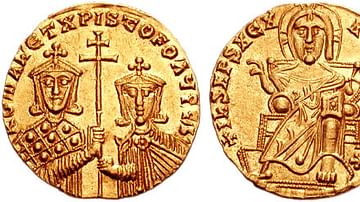
Romanos I
Romanos I Lekapenos (“the Ignorant”) was emperor of the Byzantine Empire from 920 to 944 CE. Of Armenian descent, he was a military commander who usurped the throne to rule as co-emperor with the rightful heir, but still minor, Constantine...
Definition
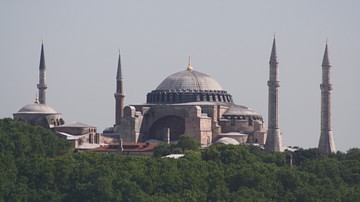
Trdat the Architect
“Trdat the Architect” or Tiridates (c. 940s-c. 1020s?) was a Armenian architect who is noted for his role in the reconstruction of the Hagia Sophia's dome in Constantinople following an earthquake in the 10th century CE, as...

Article
The History Of Chess - A 1500-year-old Strategy Game
The game of chess has a particularly long and fascinating history of more than 1500 years. Over the centuries, there have also been hundreds of different chess variants, all of which incorporate the...

Article
Mongol Multiculturalism
The Mongol Empire accepted and promoted many other cultures. Historians often talk about cultural exchange across Asia in the Mongol Empire as something that was just facilitated by peace and stability across such a huge...
