Changing Worlds: Climate & Disaster in Antiquity

Celebrate Our Anniversary with Trivia!

Join us on August 23 for a free virtual trivia party featuring questions about ancient civilizations, U.S. history, unusual historical facts, pop culture, and more.

$281 / $5000
Mark Cartwright
by
published on
bookmark_addbookmark_addedSave Collection

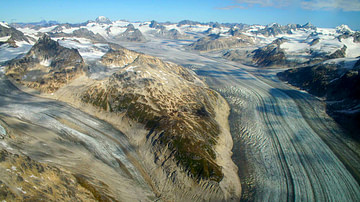
Although climate change has today become a much bigger and more globalized problem than in the past, ancient peoples did have to contend with local events that severely disrupted or even ended their way of life as they knew it. A long series of droughts in parts of the Americas led to the abandonment of such cities as Cahuachi in Peru and may have contributed to the collapse of the Maya civilization in Mesoamerica while similar climatic changes in southern Africa likely contributed to the demise of Mapungubwe and Great Zimbabwe.

Another notable catastrophe was the Bronze Age Collapse, which had devastating consequences: Climate change, combined with other stressors, brought down the Hittite Empire, the Mycenaean Civilization, Kassite Babylonia and many other states, ushering in a dark age around the Mediterranean.

There were, too, the more explosive events that brought total disaster in a matter of hours such as the great floods that are told in so many myths around the world and which archaeology has revealed often have a basis in fact. There were devastating earthquakes such as the one that brought down the walls of Jericho or toppled the Colossus of Rhodes, and the explosions of the volcanoes on Thera and at Pompeii that killed thousands in a moment. All of these events, often exacerbated by overpopulation, overworking the soil, and heavy deforestation of a specific area meant that competition for power and resources became intense as agriculture was disrupted and leaders were challenged. Sometimes, even entire cities and states succumbed. In this collection, we examine these dramatic events and their lasting consequences.

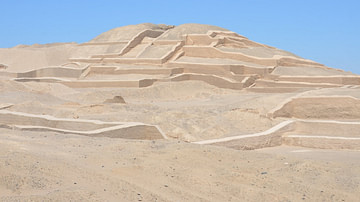
Cahuachi was abandoned from the mid-6th century CE, perhaps due to climate change as the local environment became more arid. Earthquakes, too, may have been a contributing factor to the centre's decline. It is interesting to note that the number of geoglyphs created at this time increased, perhaps indicating the urgent need for divine help to meet the crisis. The mounds were systematically covered with earth and so the abandonment of Cahuachi was both planned and deliberate.

We also have a free lesson plan for teachers on this subject.

Articles & Definitions

Bronze Age Collapse
Definition

Bronze Age Collapse

The Bronze Age Collapse (also known as Late Bronze Age Collapse) is a modern-day term referring to the decline and fall of...
Interview: The Mysterious Bronze Age Collapse with Eric Cline
Interview

Interview: The Mysterious Bronze Age Collapse with Eric Cline

The decline of the Late Bronze Age civilizations of the Mediterranean and Near East has puzzled...
Ice Age
Definition

Ice Age

An ice age is a period in which the earth's climate is colder than normal, with ice sheets capping the poles and glaciers dominating...
Fertile Crescent
Definition

Fertile Crescent - A Modern Term For An Ancient Region

The Fertile Crescent, often called the 'cradle of civilization', is the region in the Middle East...
The Atrahasis Epic: The Great Flood & the Meaning of Suffering
Article

The Atrahasis Epic: The Great Flood & the Meaning of Suffering

The Atrahasis is the Akkadian/Babylonian epic of the Great Flood sent by the gods to destroy...
Early Jericho
Article

Early Jericho

The city of Jericho is remembered for the story in the Book of Joshua in the Bible regarding its destruction by the Israelites...
Thera
Definition

Thera

Thera is the ancient name for both the island of Santorini in the Greek Cyclades and the name of the volcano which famously erupted on...
Pompeii
Definition

Pompeii

Pompeii was a large Roman town in Campania, Italy which was buried in volcanic ash following the eruption of Mt. Vesuvius in 79 CE. Excavated...
Prodigies: Earthquake Perception from Julius to L'Aquila
Article

Prodigies: Earthquake Perception from Julius to L'Aquila

The beauty of being an archaeologist is having the good fortune to find something on an archaeological...
The Classic Maya Collapse
Article

The Classic Maya Collapse

The Mesoamerican Terminal Classic period (c. 800-925) saw one of the most dramatic civilization collapses in history...
Cahuachi
Definition

Cahuachi

Cahuachi, located on the southern coast of Peru, was the most important sacred site of the Nazca civilization. The Nazca flourished...
Namazu
Definition

Namazu

Namazu (aka Onamazu) is the giant catfish of Japanese mythology held responsible for creating earthquakes. The creature was thought to...

Illustrations

Subscribe to this author

About the Author

Free for the World, Supported by You

World History Encyclopedia is a non-profit organization. Please support free history education for millions of learners worldwide for only $5 per month by becoming a member. Thank you!

World History Encyclopedia is a non-profit organization. Please support free history education for millions of learners worldwide for only $5 per month by becoming a member. Thank you!

Become a Member  

Support Us Remove Ads