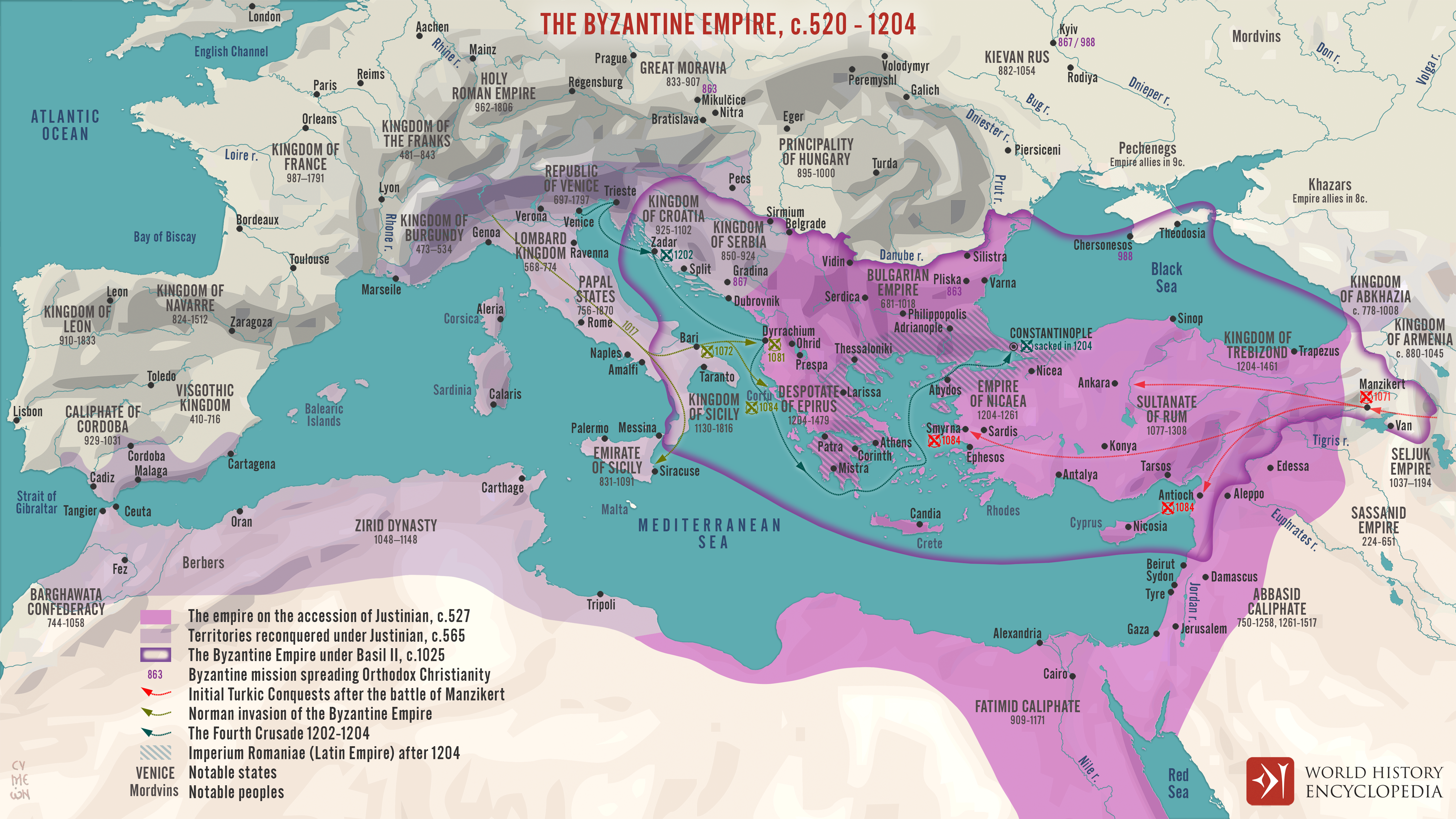
Map of the Byzantine Empire, c.520 - 1204
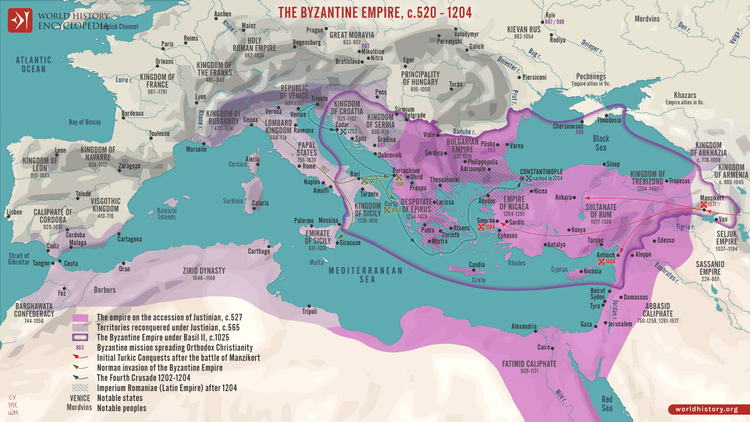
This map illustrates the shifting frontiers of the Byzantine Empire from the accession of Justinian I (reign circa 527 - 565) to the Fourth Crusade's sack of Constantinople in 1204, showing how the Greek-speaking eastern Roman state acted as both a military bulwark and a cultural bridge between medieval Europe and the Muslim world.
Justinian’s armies briefly restored Roman Mediterranean unity, but later centuries saw losses to Slavs, Bulgars, and successive Muslim caliphates. A revival peaked under Basil II (reign circa 976 - 1025), who crushed Bulgaria and expanded into Armenia, yet civil strife, the Seljuk victory at Manzikert (1071), and Venetian economic leverage eroded Byzantine strength. In 1204 a Venice-backed Fourth Crusade toppled Constantinople, replacing Byzantine rule with the Latin Empire and splintering the remnants into successor states—Nicaea, Epirus, and Trebizond.