


By 1130, Norman power stood at its peak, the result of rapid expansion and consolidation across Europe and the Mediterranean in little more than two centuries. Originating from the grant of territory to Rollo (reign c. 911–927) by the West Frankish crown under the Treaty of Saint-Clair-sur-Epte (911), the Normans rapidly transformed from Scandinavian settlers into Latin Christian rulers. By the early 12th century, Norman dynasties governed a constellation of territories stretching from England (after 1066) and southern Italy to Sicily and the eastern Mediterranean, unified less by geography than by shared military culture, elite networks, and political adaptability.
By c. 1130, under rulers such as Henry I of England (reign 1100–1135) and Roger II of Sicily (reign 1130–1154), Norman power had evolved from conquest into durable state-building. In England and Normandy, centralized administration and feudal governance deepened royal authority. In the Mediterranean, Norman lords combined Latin, Greek, and Islamic traditions to govern a multicultural realm, extending influence into Ifriqiya, the Adriatic, and the Crusader East.
About the Author
Related Images

Map of William the Conqueror's March on London 1066

Map of the Norman Conquest of Britain, 1066 - 1086 - From Hastings to Domesday – The Making of Norman England

Political Map of Italy circa 1000 CE
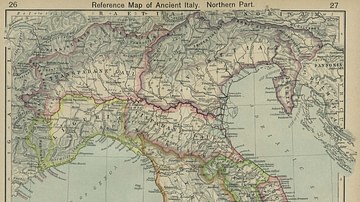
Map of Ancient Italy, Northern Part
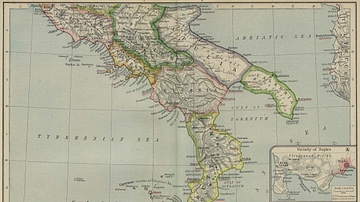
Map of Ancient Italy, Southern Part

Map of the Roman Conquest of Italy
Cite This Work
APA Style
Netchev, S. (2026, January 12). Map of the Norman World, c. 1130: Conquest, Power and State-Building. World History Encyclopedia. https://www.worldhistory.org/image/21513/map-of-the-norman-world-c-1130/
Chicago Style
Netchev, Simeon. "Map of the Norman World, c. 1130: Conquest, Power and State-Building." World History Encyclopedia, January 12, 2026. https://www.worldhistory.org/image/21513/map-of-the-norman-world-c-1130/.
MLA Style
Netchev, Simeon. "Map of the Norman World, c. 1130: Conquest, Power and State-Building." World History Encyclopedia, 12 Jan 2026, https://www.worldhistory.org/image/21513/map-of-the-norman-world-c-1130/.
