


This text is available in other languages:

The rise of Christian pilgrimage begins after the conversion of Emperor Constantine (reign 306–337 CE) and the legalization of Christianity in the Edict of Milan (313 CE). The word pilgrim comes from the Latin peregrinus meaning “stranger” or “one on a journey,” reflecting both physical travel and spiritual quest. From the 4th century onward, journeys to holy places became an integral part of Christian practice. The emergence of the idea of a “Holy Land” gave the faith a tangible dimension, linking belief to geography and reinforcing the new role of Jerusalem and other sacred sites in the Christian imagination.
Christian pilgrimage built on older Roman and Greek traditions of sacred places but expanded through the cult of saints and martyrs. Relics were seen as vessels of divine presence, drawing believers to shrines and creating a new sacred landscape stretching from Jerusalem to the edges of Christendom. These journeys required time, resources, and resilience, exposing pilgrims to physical danger and moral trial. Yet they flourished across late antiquity and the Middle Ages, becoming central acts of devotion, shaping Christian identity, and connecting local communities to a wider spiritual world.
About the Author
Related Images

Map of Christian Pilgrimage in the Middle Ages, c. 1000

Rhine Frontier of the Roman Empire, 4th century CE.

Map of Cnut the Great’s Pilgrimage to Rome in 1027 - Kingship, Faith, and Diplomacy Across Medieval Europe

Map of the Growth of Christianity in the Roman Empire
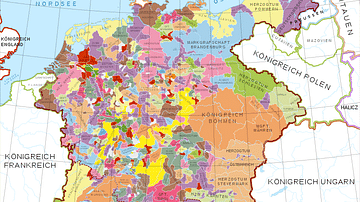
Holy Roman Empire in the 13th century CE

Map of the Holy Roman Empire under Otto the Great c. 972
Cite This Work
APA Style
Netchev, S. (2022, June 15). Map of the Early Christian Pilgrimage (4th-5th Century). World History Encyclopedia. https://www.worldhistory.org/image/16025/map-of-the-early-christian-pilgrimage-4th-5th-cent/
Chicago Style
Netchev, Simeon. "Map of the Early Christian Pilgrimage (4th-5th Century)." World History Encyclopedia, June 15, 2022. https://www.worldhistory.org/image/16025/map-of-the-early-christian-pilgrimage-4th-5th-cent/.
MLA Style
Netchev, Simeon. "Map of the Early Christian Pilgrimage (4th-5th Century)." World History Encyclopedia, 15 Jun 2022, https://www.worldhistory.org/image/16025/map-of-the-early-christian-pilgrimage-4th-5th-cent/.
