
Search
Remove Ads
Advertisement
Search Results

Definition
Faras Cathedral
The Cathedral of Faras, a city in ancient Nubia and once the capital of the Kingdom of Faras (aka Nobatia), was built and rebuilt from the 8th to 11th century CE. Its interior was decorated with hundreds of frescoes which are...

Definition
Daniel Morgan
Daniel Morgan (l. c. 1735-1802) was an American frontiersman and soldier, most famous for leading a corps of riflemen during the American Revolutionary War (1775-1783). He rose to the rank of brigadier general in the Continental...
Definition
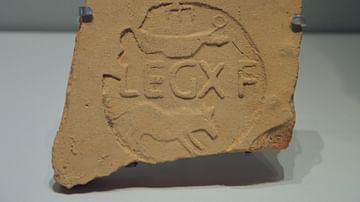
Legio X Fretensis
Legio X Fretensis was a legion of the Roman army formed by either Julius Caesar or Augustus. The legion spent most of its existence in the East, primarily in Judea. It participated in Corbulo’s two Armenian campaigns as well...

Definition
Mesopotamian Art and Architecture - The Birth of Art and Architecture in the Ancient World
Ancient Mesopotamian art and architectural works are among the oldest in the world, dating back over 7,000 years. The works first appear in northern Mesopotamia prior...

Definition
Sleipnir
Sleipnir is the eight-legged horse ridden primarily by the god Odin in Norse mythology. He is the son of the god Loki (in the form of a mare) and the stallion Svadilfari who belonged to the jötunn that built the walls of Asgard. In...

Definition
Uruk - The First Great City
Uruk was one of the most important cities (at one time, the most important) in ancient Mesopotamia. According to the Sumerian King List, it was founded by King Enmerkar circa 5000/4500 BCE. Uruk is best known as the birthplace...
Definition
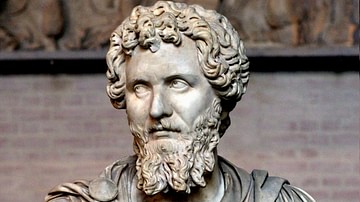
Septimius Severus
Lucius Septimius Severus was Roman emperor from April 193 to February 211 CE. He was of Libyan descent from Lepcis Magna and came from a locally prominent Punic family who had a history of rising to senatorial as well as consular...

Definition
Hellenistic Warfare
When Alexander the Great died in 323 BCE, he left behind an empire devoid of leadership. Without a named successor or heir, the old commanders simply divided the kingdom among themselves. For the next three decades, they fought...

Definition
Herodotus
Herodotus (l. c. 484 – 425/413 BCE) was a Greek historian famous for his work Histories. He was called The Father of History by the Roman writer Cicero, who admired him, but has also been rejected as The Father of Lies by critics...

Article
The Infrastructure of Caesarea Maritima
Caesarea Maritima, an ancient metropolis in modern-day Israel, was a remarkable engineering accomplishment. Extending Rome's military and commercial presence in the eastern Mediterranean in the latter years...
