
Search
Remove Ads
Advertisement
Search Results

Lesson Pack
Arts & Culture in Ancient Greece
We have prepared four lesson plans including classroom activities, assignments, homework, and keys as well as: - Multiple choice quiz questions in an excel format. - Glossary of keywords and concepts in an excel...

Article
The Christian Concept of Human Sexuality as Sin
In the ancient world, human sexuality was crucial for the survival of the tribe and clan as well as pleasurable, a gift from the gods. Thousands of native cults emphasized fertility through rituals and...

Article
The Hyphasis Mutiny
The so-called Hyphasis Mutiny was a conflict between Alexander the Great (356-323 BCE) and his army following their victory at the river Hydaspes in 326 BCE. Alexander voiced plans for further conquests in the Indian subcontinent...

Article
Mithridates’ Poison Elixir: Fact or Fiction?
King Mithridates VI of Pontus, also known as Mithradates VI Eupator Dionysus and Mithridates the Great (135–63 BCE, r. 120-63 BCE) was a dogged Roman foe for much of his life. In 88 BCE, he orchestrated...

Article
A Brief History of the Rose
The rose that grows in many different forms in gardens all over the world today is an evolution of rose-like plants that lived in the northern hemisphere between 33 million and 23 million years ago. Traces of them have...

Article
Hygieia, the Goddess of Health
Modern medicine has its origin in the ancient world. The oldest civilizations used magic and herbs to cure their sick people, but they also used religion to free them from harm and to protect their health. The medical...

Article
A Visitor's Guide to Oplontis, Stabiae & Boscoreale
More than 2,000 years ago, extremely wealthy Romans lived on the sunny shores of the Bay of Naples at Pompeii and in opulent villas nearby, unconcerned about Mount Vesuvius in the distance. Julius Caesar...
Article
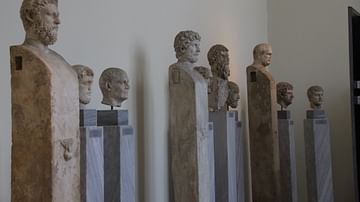
The Desecration of the Statues of Hermes, 415 BCE
On 7 June 415 BCE, various statues of the god Hermes were desecrated in Athens. The Peloponnesian War (431-404 BCE) had been raging for decades as one of the biggest civil wars in Ancient Greece, and...

Article
Alexander the Great & the Burning of Persepolis
In the year 330 BCE Alexander the Great (l. 356-323 BCE) conquered the Achaemenid Persian Empire following his victory over the Persian Emperor Darius III (r. 336-330 BCE) at the Battle of Gaugamela in...

Article
Early Christianity
Emerging from a small sect of Judaism in the 1st century CE, early Christianity absorbed many of the shared religious, cultural, and intellectual traditions of the Greco-Roman world. In traditional histories of Western culture...
