
Search
Remove Ads
Advertisement
Search Results
Definition
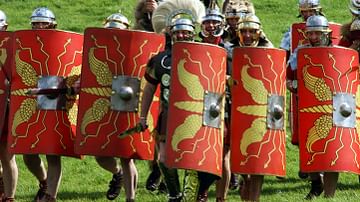
Legio I Germanica
Legio I Germanica was a Roman legion that won acclaim early under Augustus (27 BCE - 14 CE) but was stripped of its title for cowardice. Stationed on the Lower Rhine, the legion mutinied in 14 CE and then faced disgrace when...
Definition
Basil I
Basil I was emperor of the Byzantine Empire from 867 to 886 CE and he founded the "Macedonian" dynasty which lasted for over 200 years. Basil was an Armenian from a humble background who had risen to become the second most powerful man...

Definition
Constantinople
Built in the seventh century BCE, the ancient city of Byzantium proved to be a valuable city for both the Greeks and Romans. Because it lay on the European side of the Strait of Bosporus, the Emperor Constantine understood its...

Definition
Nihon Shoki
The Nihon Shoki ('Chronicle of Japan' and also known as the Nihongi) is an official history of Japan which was written by a committee of court scholars in 720 CE. It is a compilation of myths and legends concerning the Shinto gods...

Definition
Arjuna
Arjuna (also given as Arjun) is the great hero of the Indian epic Mahabharata and the philosophical-religious dialogue Bhagavad Gita. His name means “shining”, “silver” and similar terms relating to brightness. He is the most popular...

Definition
Simon Forman
Simon Forman (1552-1611) was an Elizabethan physician, astrologer, magician, and alchemist who lived and worked in both London and Wiltshire, England. He was unusual in that despite receiving no formal training in medicine or astrology...

Definition
Philip Sidney - The Gentleman-Poet of Elizabethan England
Sir Philip Sidney (1554-1586) was an English poet, scholar, soldier, and courtier, one of the most prominent figures at the court of Queen Elizabeth I of England (r. 1558-1603). During his lifetime...

Definition
Charles VI of France - The Mad King
Charles VI (lived 1368-1422) reigned as King of France from 1380 to 1422, during an important phase of the Hundred Years' War (1337-1453) against England. Known as the 'Mad King' due to his frequent bouts with psychosis...

Article
The Origin & History of the BCE/CE Dating System
The BCE/CE dating system was first used in the 17th century and has been used since in scholarly publications read by people of all faiths and cultures in an effort to be inclusive. This system is also...
Definition
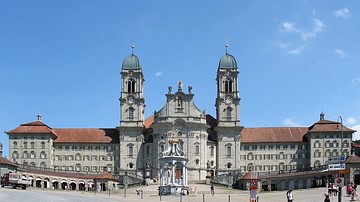
Einsiedeln Abbey
Einsiedeln Abbey and Monastery (German: Kloster Einsiedeln), located some 31 km (19 mi) southeast of Zürich at the foot of a hill in the town of Einsiedeln in Canton Schwyz, Switzerland, is the most important site of Roman Catholic...
