
Search
Remove Ads
Advertisement
Search Results

Definition
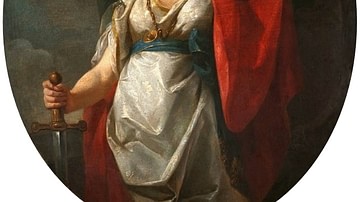
Artemis
Artemis was the Greek goddess of hunting, wild nature, and chastity. Daughter of Zeus and sister of Apollo, Artemis was a patron of girls and young women, and a protectress during childbirth. Artemis was widely worshipped but her most famous...
Definition
Themis
Themis is the personification and goddess of divine law, will, and justice in Greek mythology. She was held in high esteem by the Olympians, often sitting by Zeus' throne and giving him wise counsel. Themis held the place of Oracle at Delphi...
Definition
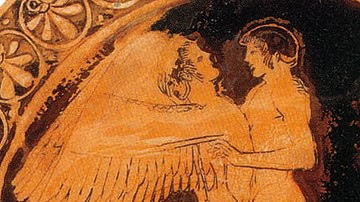
Zephyrus
Zephyrus was the god of the west wind and the messenger of spring in Greek mythology. He was known as one of the four Anemoi, or wind gods, each of whom represented a cardinal direction and, except for Eurus, a season. Zephyrus was often...

Definition
Fire Temple
Fire Temples are places of worship in the Zoroastrian religion. They were known as ataskada (“house of fire”) by the Persians but are best known today by their Greek name pyratheia (fire temple). They are thought to have originated from the...
Definition
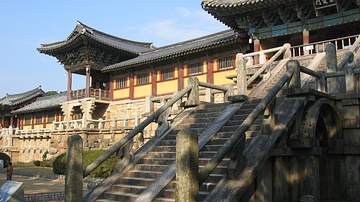
Bulguksa Temple
The Bulguksa Temple (aka Pulguk-sa Temple or 'Temple of the Buddha Land') was built in the 8th century CE on the wooded slopes of Mt. Tohamsan at the ancient Silla capital of Geumseong (modern Gyeongju, South Korea). The Buddhist temple...

Video
The Greek God Apollo: The Myths of the Olympian God of Music, Medicine, the Sun and Archery
The god Apollo in Greek mythology is the Olympian god of, well, quite a lot! Apollo is associated with the bow, music, divination, the sun, poetry, healing and medicine and, who would have thought, plagues. He was one of the most loved gods...
Image
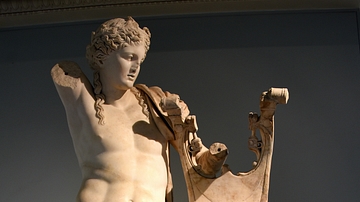
Apollo Holding a Kithara
In this elaborately carved figure, the iconographical features of both Apollo and Dionysos, the wine god, have been fused.; the slipping himation and the sensual treatment of the flesh are typical of Dionysos, while the kithara and quiver...

Definition
Karnak
Karnak is the modern-day name for the ancient site of the Temple of Amun at Thebes, Egypt. The Egyptians called the site Nesut-Towi, "Throne of the Two Lands", Ipet-Iset, "The Finest of Seats" as well as Ipt-Swt, "Selected Spot" also given...

Article
Sailing on Lake Nasser towards Abu Simbel
In ancient times, the First Cataract at Aswan marked the southern frontier of Egypt. Beyond lay the land of Nubia, which stretched along the river Nile from the First Cataract southwards for about 250 kilometres (155 mi). This region, known...
Image
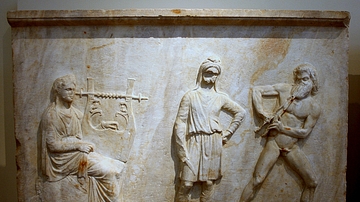
Apollo and Marsyas
National Archaeological Museum, Athens, 215. 330-20 BCE. This relief slab is one of four that made up the revetment of a pedestal (only three survive), and was found at Mantineia, Arcadia. The pedestal either acted as a base for a statue...
