
Search
Did you mean: Silenus?
Remove Ads
Advertisement
Search Results
Definition
Edessa
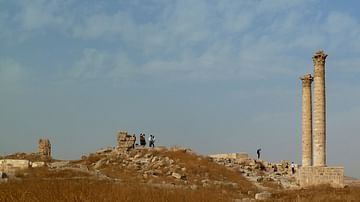
Edessa (modern Urfa), located today in south-east Turkey but once part of upper Mesopotamia on the frontier of the Syrian desert, was an important city throughout antiquity and the Middle Ages. A city within the Seleucid Empire, then capital...

Definition
Ctesiphon
Ctesiphon was an ancient city and trade center on the east bank of the Tigris River founded during the reign of Mithridates I (the Great, 171-132 BCE). It is best known in the modern day for the single-span arch, Taq Kasra, which is the most...
Definition
Ptolemy I
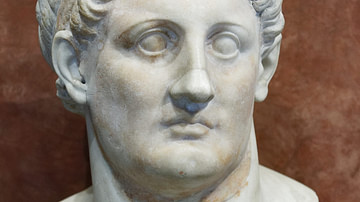
Ptolemy I Soter (366-282 BCE) was one of the successor kings to the empire of Alexander the Great. He served not only as king of Egypt but also the founder of the Ptolemaic Dynasty, a dynasty which included the infamous Cleopatra VII. Early...

Definition
Sidon
Sidon is the Greek name (meaning 'fishery') for the ancient Phoenician port city of Sidonia (also known as Saida) in what is, today, Lebannon (located about 25 miles south of Beirut). Along with the city of Tyre, Sidon was the most powerful...

Definition
Hypaspist
The hypaspists or hypaspistai were a distinct type of infantry soldier who served as a vital part of the Macedonian armies of both Phillip II of Macedon (r. 359 BCE - 336 BCE) and his son and heir Alexander the Great (r. 336-323 BCE). The...

Definition
Amastris
Amastris (c. 340/39-285 BCE) was a niece of the Persian king Darius III (r. 336-330 BCE) through her father Oxyathres. She was married in succession to Alexander's general Craterus, the tyrant Dionysius of Heraclea, and finally to Lysimachus...
Image
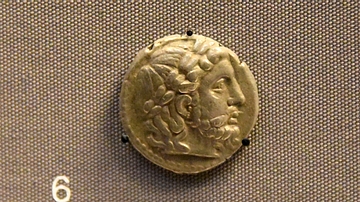
Seleucid Silver Tetradrachm Coin
This silver tetradrachm coin belonged to Seleucus I. Reign of Seleucus I Nicator, 305-281 BCE. From Seleucid Syria. Donated by the Bank of England. (The British Museum, London).

Article
Parthia: Rome's Ablest Competitor
As a superpower in its own right and in competition with Rome, Parthia's empire - ruling from 247 BCE to 224 CE - stretched between the Mediterranean in the west to India in the east. Not only did the Parthians win battles against Rome they...

Article
Depictions of India in Ancient Literature
Herodotus (484 BCE – c. 425 BCE) has been called the Father of History since he was the first historian known to collect his materials in detail, test their accuracy to a certain extent and arrange them in a well-constructed and vivid narrative...

Definition
Mesopotamia - The Beginning of Beginnings
Mesopotamia (from the Greek, meaning "between two rivers") was an ancient region located in the Near East (Middle East) bounded in the northeast by the Zagros Mountains and in the southeast by the Arabian Plateau, corresponding to modern-day...
