
Search
Remove Ads
Advertisement
Search Results

Definition
King Arthur
King Arthur is among the most famous literary characters of all time. The Arthurian legend of the Knights of the Round Table, Camelot, the Quest for the Holy Grail, the love affair of Lancelot and Guinevere, and the wizard Merlin...

Definition
Queen of Sheba
The Queen of Sheba is the monarch mentioned in the Bible and then in later works who travels to Jerusalem to experience the wisdom of King Solomon (c. 965-931 BCE) of Israel first-hand. The queen is first mentioned in I Kings 10:1-13...

Definition
Stirling Castle
Stirling Castle, located on a strategically important rocky outcrop by the River Forth in central Scotland, was a key royal residence from the late 11th century into the early modern period and subject to many battles and sieges...
Definition
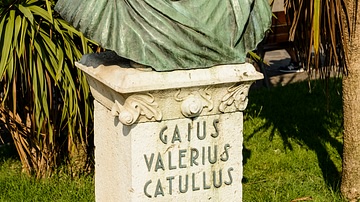
Catullus
Gaius Valerius Catullus (84-54 BCE) was a Roman poet whose poems are considered to be some of the finest examples of lyric poetry from ancient Rome, despite his youth and early death. Catullus wrote in the neoteric style during the...

Definition
Code of Hammurabi - The Most Influential Law Code of the Ancient World
The Code of Hammurabi was a set of 282 laws inscribed in stone by the Babylonian king Hammurabi (reign 1792-1750 BCE), who conquered and then ruled ancient Mesopotamia. Although his law...

Definition
Protestant Reformation
The Protestant Reformation (1517-1648) refers to the widespread religious, cultural, and social upheaval of 16th-century Europe that broke the hold of the medieval Church, allowing for the development of personal interpretations...
Definition
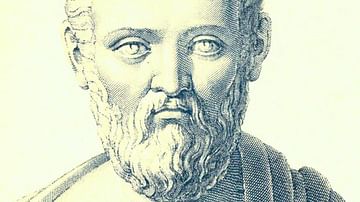
Isocrates
Isocrates (436-338 BCE) was an ancient Athenian rhetorician, characterized as one of the most prominent orators of his time, even though it appears that he restricted himself to writing speeches and not orating them himself. His most...
Definition
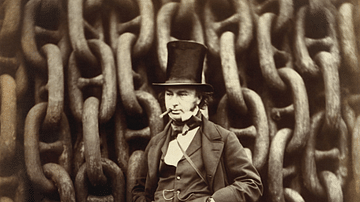
Isambard Kingdom Brunel
Isambard Kingdom Brunel (1806-1859) was a British engineer and a key figure of the British Industrial Revolution (1760-1840). Brunel masterminded the Great Western Railway from London to Bristol, designed and built innovative...

Definition
Germ Theory
The germ theory, which emerged in the late 19th century, demonstrated that microscopic germs caused most human infectious diseases. The germs involved included bacteria, viruses, fungi, protozoa, and prions. Louis Pasteur (1822-1895...

Definition
The Enlightenment
The Enlightenment (Age of Reason) was a revolution in thought in Europe and North America from the late 17th century to the late 18th century. The Enlightenment involved new approaches in philosophy, science, and politics. Above...
