
Search
Did you mean: Melusine?
Remove Ads
Advertisement
Search Results

Definition
Sennacherib
Sennacherib (r. 705-681 BCE) was the second king of the Sargonid Dynasty of Assyria (founded by his father Sargon II, r. 722-705 BCE). He is one of the most famous Assyrian kings owing to the part he plays in narratives in the biblical...

Definition
Cambyses II
Cambyses II (r. 530-522 BCE) was the second king of the Achaemenid Empire. The Greek historian Herodotus portrays Cambyses as a mad king who committed many acts of sacrilege during his stay in Egypt, including the slaying of the sacred...

Definition
Nitocris
Nitocris (2184-2181 BCE) is the Greek name for Nitiqret, the last monarch of the 6th Dynasty of Egypt which concluded the period of the Old Kingdom (c. 2613-2181 BCE). Nitocris is best known from the story told of her by Herodotus (484-425/413...

Definition
Berenike IV
Berenike IV (r. 58-55 BCE) was queen of Ptolemaic Egypt and the older sister of Cleopatra VII (r. 51-30 BCE). She ruled briefly after her father Ptolemy XII was overthrown by a popular rebellion. Berenike IV's reign ended in 55 BCE...

Article
Egyptian Gods - The Complete List
The gods and goddesses of Ancient Egypt were an integral part of the people's everyday lives for over 3,000 years. There were over 2,000 deities in the Egyptian pantheon, many whose names are well known - Isis, Osiris...

Article
Ten Ancient Persia Facts You Need to Know
Ancient Persian culture exerted a powerful influence throughout the Near East, and beyond, for over a thousand years between c. 550 BCE - 651 CE and many aspects of their culture continued to influence others...

Article
Justinian's Plague (541-542 CE)
During the reign of the emperor Justinian I (527-565 CE), one of the worst outbreaks of the plague took place, claiming the lives of millions of people. The plague arrived in Constantinople in 542 CE, almost a year...

Article
Cats in the Middle Ages
Cats in the Middle Ages were generally disapproved of, regarded as, at best, useful pests and, at worst, agents of Satan, owing to the medieval Church and its association of the cat with evil. Prior to the widespread acceptance...
Article
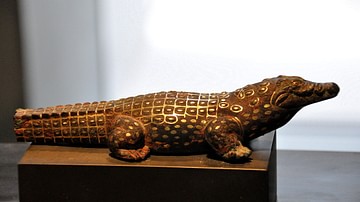
Pets in Ancient Egypt
Pets were very important to the ancient Egyptians and considered gifts from the gods to be cared for until their death when they were expected to be returned to the divine realm from which they had come. In life, pets were...

Article
Achaemenid Kings List & Commentary
The Achaemenid Empire (c. 550-330 BCE) was the first great Persian political entity in Western and Central Asia which stretched, at its peak, from Asia Minor to the Indus Valley and Mesopotamia through Egypt. It...
