
Search
Did you mean: Peloponnese?
Search Results
Definition
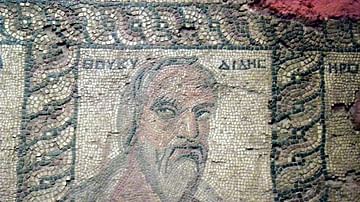
Thucydides
Thucydides (c. 460/455 - 399/398 BCE) was an Athenian general who wrote the contemporary History of the Peloponnesian War between Athens and Sparta, which lasted from 431 BCE to 404 BCE. However, Thucydides' History was never finished, and...

Definition
Cyrene
Cyrene (modern-day Shahhat, Libya) was a vital cultural center and port of trade in North Africa founded in 631 BCE by Greek colonists from the island of Thera. The city is best known as the birthplace of the philosopher Aristippus of Cyrene...

Definition
Ancient Sicily
The Mediterranean island of Sicily, with its natural resources and strategic position on ancient trading routes, aroused the intense interest of successive empires from Carthage to Athens to Rome. Consequently, the island was never far from...

Definition
Rhodes
Rhodes, with an area of 1,400 km², is the largest island in the Greek Dodecanese group located in the south-eastern Aegean. The island was an important protagonist in wider Greek and Mediterranean affairs throughout the Bronze Age, Archaic...

Definition
Xenophon
Xenophon of Athens (l. 430 to c. 354 BCE) was a contemporary of Plato and a fellow student of Socrates. He is best known for his Anabasis (The March Up Country) detailing the retreat of the Ten Thousand Greek mercenaries after the defeat...

Definition
Halicarnassus
Halicarnassus (modern Bodrum, Turkey) was an ancient Ionian Greek city in the region of Caria, located on the coast of Anatolia. It is best known as the birthplace of Herodotus (l. c. 484-425/413 BCE), the 'Father of History', and as the...

Definition
Cyclades
The Cyclades are a group of islands in the southern Aegean situated between the Greek mainland and Turkey. The name was coined in the Archaic period as the islands form an approximate circle (kyklos) around the central and most sacred island...

Image
Map of the Hellenic Leagues and Hegemonies, 4th century BCE
The political landscape of the Hellenic world shifted dramatically in the aftermath of the Peloponnesian War (431–404 BCE), a conflict that ended with Sparta’s victory but left the Greek city-states militarily exhausted and politically fragmented...

Definition
Propylaea
Propylaea is the name given to monumental gates or entranceways to a specific space, usually to a temple or religious complex and as such they acted as a symbolic partition between the secular and religious parts of a city. Less complex examples...

Definition
Eleusis
Eleusis was a deme of Athens and most famous for its annual festival of the Mysteries in honour of Demeter and Persephone. The site was also an important fortress protecting Attica and held several other important festivals, notably the Thesmophoria...
