
Search
Remove Ads
Advertisement
Search Results

Definition
Poseidon
Poseidon was the Greek god of the sea and rivers, creator of storms and floods, and the bringer of earthquakes and destruction. He was perhaps the most disruptive of all the ancient gods but he was not always a negative force. He was a protector...

Definition
Script - The Written Record of Humanity
Script is the written expression of a language. Cuneiform, the first script, was invented in Sumer, Mesopotamia, circa 3600/3500 BCE; hieroglyphics sometime prior to the Early Dynastic Period in Egypt (circa 3150-2613 BCE); and Sanskrit in...

Definition
Ancient Persian Warfare
The ancient Persian military evolved from the earlier armed forces of the Medes which, in turn, developed from the warrior class of the indigenous people of the Iranian Plateau, the Aryan migrants (including the Persians) who later settled...

Definition
Odin
Odin (Old Norse: Óðinn) is the main god in Norse mythology. Described as an immensely wise, one-eyed old man, Odin has by far the most varied characteristics of any of the gods and is not only the deity to call upon when war was being prepared...

Definition
Philistines
The Philistines populated the coastal regions of Canaan from the 12th century BCE to their disappearance in 604 BCE. The word "Philistine" derives from the Hebrew ha-Plištim for the combination of several tribes of Syria and Judea with the...

Definition
Romani
Romani is an umbrella term used to describe a diverse ethnolinguistic group of people with a historical presence in Europe and West Asia. The historically common term 'Gypsy' is based on the myth that they came from Egypt. In reality, the...

Definition
Magadha Kingdom
Magadha was an ancient kingdom located on the Indo-Gangetic plains in eastern India and spread over what is today the modern state of Bihar. At the height of its power, it claimed suzerainty over the entire eastern part of the country (roughly...
Definition
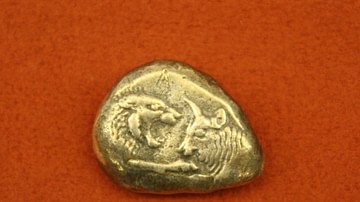
Lydia
Lydia was a region of western Asia Minor which prospered due to its natural resources and position on trading routes between the Mediterranean and Asia. The Kingdom of Lydia flourished in the 7th and 6th centuries BCE and expanded to its...
Definition
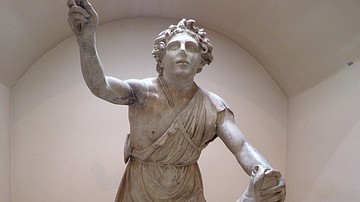
Mithraism
The Mithraic Mysteries, also known as Mithraism, were a mystery cult in the Roman world where followers worshipped the Indo-Iranian deity Mithras (Akkadian for "contract") as the god of friendship, contract and order. The cult first appeared...

Definition
Phrygia
Phrygia was the name of an ancient Anatolian kingdom (12th-7th century BCE) and, following its demise, the term was then applied to the general geographical area it once covered in the western plateau of Asia Minor. With its capital at Gordium...
