
Search
Remove Ads
Advertisement
Search Results
Definition
Susa
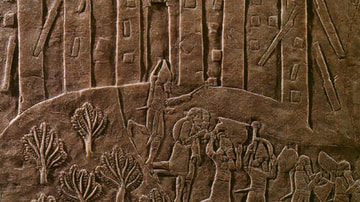
Susa was one of the oldest cities in the world and part of the site is still inhabited as Shush, Khuzestan Province, Iran. Excavations have uncovered evidence of continual habitation dating back to 4395 BCE but that early community grew...

Definition
Aqueduct
Aqueducts transport water from one place to another, achieving a regular and controlled supply to a place that would not otherwise receive sufficient quantities. Consequently, aqueducts met basic needs from antiquity onwards such as...
Definition
Thebes (Greece)
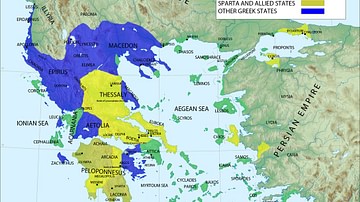
Thebes is a town in central Greece which has been continuously inhabited for five millennia. It was an important Mycenaean centre in the middle to late Bronze Age and was a powerful city-state in the Classical period, participating...

Definition
Centaur
A centaur was a creature from Greek mythology which was half-man and half-horse. The head, arms and torso of a centaur were human and joined at the waist to the body and legs of a horse. Centaurs represented barbarism and unbridled chaos...

Definition
Roman Religion
In many societies, ancient and modern, religion has performed a major role in their development, and the Roman Empire was no different. From the beginning Roman religion was polytheistic. From an initial array of gods and spirits...

Definition
Ancient Egyptian Burial
Egyptian burial is the common term for the ancient Egyptian funerary rituals concerning death and the soul's journey to the afterlife. Eternity, according to scholar Margaret Bunson, “was the common destination of each man...

Definition
Hermes - The Messenger of the Olympian Gods
Hermes was the ancient Greek god of trade, wealth, luck, fertility, animal husbandry, sleep, language, thieves, and travel. One of the cleverest and most mischievous of the 12 Olympian gods, Hermes was their...

Definition
Ancient Greek Sculpture
The sculpture of ancient Greece from 800 to 300 BCE took inspiration from Egyptian and Near Eastern monumental art, and evolved into a uniquely Greek vision of the art form. Greek artists captured the human form in a way...

Definition
Silk in Antiquity
Silk is a fabric first produced in Neolithic China from the filaments of the cocoon of the silk worm. It became a staple source of income for small farmers and, as weaving techniques improved, the reputation of Chinese silk spread...

Definition
Heka
Heka is the god of magic and medicine in ancient Egypt and is also the personification of magic itself. He is probably the most important god in Egyptian mythology but is often overlooked because his presence was so pervasive as to make...
