
Search
Remove Ads
Advertisement
Search Results

Definition
Mandala
A mandala (Sanskrit for “circle”) is an artistic representation of higher thought and deeper meaning given as a geometric symbol used in spiritual, emotional, or psychological work to focus one's attention. The image first appears in...

Definition
Ancient Celtic Art
Art, along with language, is perhaps the best way to see the connections between the ancient peoples we label as Celts who lived in Iron Age Europe. There were great variations across time and space but common features of ancient...

Definition
Mycenaean Art
The Mycenaean civilization flourished in the late Bronze Age from the 15th to the 13th century BCE, and their artists would continue the traditions passed on to them from Minoan Crete. Pottery, frescoes, and goldwork skillfully...

Definition
Euclid
Euclid of Alexandria (lived c. 300 BCE) systematized ancient Greek and Near Eastern mathematics and geometry. He wrote The Elements, the most widely used mathematics and geometry textbook in history. Older books sometimes confuse him...
Definition
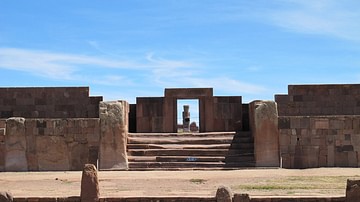
Tiwanaku
Tiwanaku (or Tiahuanaco) was the capital of the Tiwanaku empire between c. 200 - 1000 CE and is situated in the Titicaca basin. At an altitude of 3,850 metres (12,600 ft) it was the highest city in the ancient world and had a peak population...

Definition
Wari Civilization
The Wari civilization flourished in the coastal and highland areas of ancient Peru between c. 450 and c. 1000 CE. Based at their capital Huari, the Wari successfully exploited the diverse landscapes they controlled to construct...

Definition
Carthaginian Art
The art of the Carthaginians was an eclectic mix of influences and styles, which included Egyptian motifs, Greek fashion, Phoenician gods, and Etruscan patterns. Precious metals, ivory, glass, terracotta, and stone were transformed...

Definition
Serpent Mound
Serpent Mound (also known as Great Serpent Mound) is an archaeological and historic site in Peebles, Ohio, USA, enclosing an effigy mound 1348 feet (411 m) long in the shape of a serpent, the largest effigy mound of a serpent in...

Definition
Paul Cézanne
Paul Cézanne (1839-1906) was a French post-impressionist artist. Although he struggled for recognition in his own lifetime and often lacked confidence in his work, the artist's unique style, use of light and colour, and his interest...
Definition
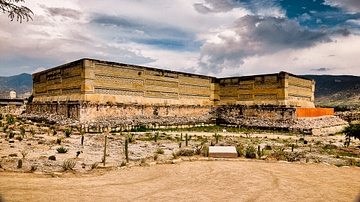
Mitla
Mitla, located in the eastern portion of the Valley of Oaxaca in southern Mexico, was an important site of the Zapotec civilization. Gaining prominence from the early Post-Classic period (c. 700-900 CE), Mitla became the most important...
