
Search
Did you mean: Enoch?
Remove Ads
Advertisement
Search Results
Definition
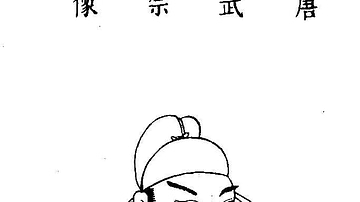
Emperor Wuzong of Tang
Wuzong of Tang (also Wu-Tsung, formerly Li Yan) reigned as emperor of China from 840 to 846 CE. He is best remembered today for his persecution of Buddhists, the worst such attack in all of China's history, and his early...

Definition
Michael III
Michael III, also known as “Michael the Drunkard” by his detractors, was emperor of the Byzantine Empire from 842 to 867 CE. Never quite escaping the shadow of his mother Theodora, who ruled as regent in his name until c. 855 CE...

Definition
Totila
Totila (birth name, Baduila-Badua r. 541-552 CE) was the last great king of the Ostrogoths in Italy. He was the nephew of the Gothic king Ildibad who was succeeded by Eraric the Rugian (d. 541 CE). The Goths of Italy felt that Eraric...

Definition
Michael IV the Paphlagonian
Michael IV the Paphlagonian was Byzantine emperor from 1034 to 1041 CE. He had an affair with Empress Zoe, then married her and was crowned emperor after the death of her first husband, Romanos III. He ran a competent...

Definition
Saint Cyril
Saint Cyril (aka Kyrillos and Constantine the Philosopher, d. 867 CE) was a Byzantine linguist, teacher, scholar and missionary who famously preached Christianity to the Slavs in Moravia with his brother Methodius during the 9th century...

Article
Society in the Byzantine Empire
The society in the Byzantine Empire (4th-15th century CE) was dominated by the imperial family and the male aristocracy but there were opportunities for social advancement thanks to wars, population movements, imperial...

Article
Women in the Byzantine Empire
Women in the Byzantine Empire (4th to 15th century CE) were, amongst the upper classes, largely expected to supervise the family home and raise children while those who had to work for a living did so in most of the...

Article
Mythological Re-Enactments in Ancient Roman Spectacle
To this day the ancient Romans remain infamous for their dramatic use of spectacle and other forms of entertainment. A lesser known variation of Roman spectacle is the mythological re-enactments that...

Article
Gilgamesh, Enkidu, and the Netherworld
Gilgamesh, Enkidu, and the Netherworld is a Sumerian poem pre-dating The Epic of Gilgamesh and featuring its central characters. It is sometimes included in modern-day translations as Book 12 but is usually omitted...

Article
Saladin & the Unification of the Muslim Front: 1169-1187 CE
Saladin (c. 1137 – 1193 CE), the Muslim ruler who crushed the mighty Crusader army at the Horns of Hattin (1187 CE) and re-took Jerusalem after 88 years of Crusader control, was born in a world...
