
Search
Did you mean: Ur?
Search Results

Definition
Ancient Persian Art and Architecture
Persian art and architecture in the present day is associated with the nation of Iran and usually designated as beginning with the Achaemenid Empire (c. 550-330 BCE) but has an even longer history with its origins dating back to before the...

Definition
Sumerian King List - Who Was King? And Who Was Not King?
The Sumerian King List (abbreviated as SKL and also known as Chronicle of the One Monarchy) is an ancient Sumerian document whose earliest version is dated to Mesopotamia's Ur III period (circa 2112 to circa 2004 BCE) relating how kingship...

Definition
Ninurta
Ninurta (identified with Ningirsu, Pabilsag, and the biblical Nimrod) is the Sumerian and Akkadian hero-god of war, hunting, and the south wind. He first appears in texts in the early 3rd millennium BCE as an agricultural god and local deity...
Definition
Samaritans
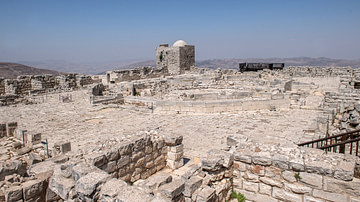
The Samaritans are a religious sect of ethnic Jews living near Mount Gerizim, Nablus, Hebron, and the West Bank in Israel. This community differs from mainstream Judaism by claiming that followers only accept the five books of Moses (Torah...

Definition
Kassite
It is thought that the Kassites originated as tribal groups in the Zagros Mountains to the north-east of Babylonia. Their leaders came to power in Babylon following the collapse of the ruling dynasty of the Old Babylonian Period in 1595 BC...
Definition
Tughlaq Dynasty
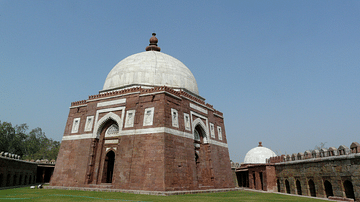
The Tughlaq dynasty (also spelt Tughluq), ruled the Delhi sultanate from 1320 to 1413. Followed by the Khalji dynasty and preceded by the Sayyids, the Tughlaq dynasty formed an important period in the history and culture of the Sultanate...

Image
Chogha Zanbil Ziggurat, Iran
Chogha Zanbil is a magnificent, 3300-year-old ancient Elamite complex located 30 kilometres (18 miles) south-east of the ancient city of Susa in the Khuzestan province of western Iran. The principal element of this complex is an enormous...

Article
12 Great Cities of Ancient Mesopotamia - The Rise and Fall of the Earliest Cities in the World
The great cities of Mesopotamia ("the land between two rivers") developed prior to the late 4th millennium BCE along two rivers – the Tigris and Euphrates – and were fully established by the Early Dynastic period (circa 2900 to circa 2350/2334...

Article
Religion in the Mongol Empire
The Mongol Empire (1206-1368 CE) covered Asia from the Black Sea to the Korean peninsula and so naturally included all manner of religions within its borders, but the Mongols themselves had their own particular religious beliefs and rituals...

Article
Ancient Persian Gods, Heroes, and Creatures - The Complete List
The term 'mythology' comes from the Greek mythos (story-of-the-people) and logos (word or speech), meaning the spoken story of a people. Every civilization of the ancient world developed a belief system, which is characterized as 'mythology'...
