
Search
Did you mean: Chiron?
Remove Ads
Advertisement
Search Results

Definition
The Medieval Church
Religious practice in medieval Europe (c. 476-1500) was dominated and informed by the Catholic Church. The majority of the population was Christian, and "Christian" at this time meant "Catholic" as there was initially no other form of that...

Article
Unam Sanctam: Spiritual Authority & the Medieval Church
The Unam Sanctam (1302) was a papal bull issued by Pope Boniface VIII (served 1294-1303) requiring the complete submission of all people, including kings, to the authority and dictates of the pope. As the Church was understood as holding...

Article
France’s 1905 Law of Separation of Church and State
The 1905 Law of Separation of Church and State was enacted as the climax of decades of conflict between monarchists and anticlerical Republicans who viewed Christianity as a permanent obstacle to the social development of the Republic. The...

Article
Diversity in Church Architecture in Medieval England
Medieval English churches differed in size and layout. Their original and evolving role(s), financial and material resources, and architectural fashions helped determine variability. However, their look ultimately grew from a constant symbiosis...
Article
Antoine Court & the Church of the Desert
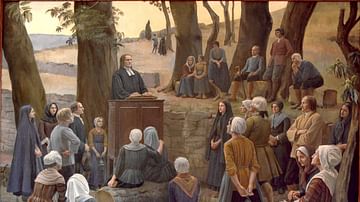
In March 1715, Louis XIV of France (r. 1643-1715) issued a declaration stating that all subjects of the king were also subjects of the Catholic Church. In defiance of the king's decree, Antoine Court (l. 1696-1760) gathered a small group...
Article
The Dreyfus Affair & the Separation of Church and State in France
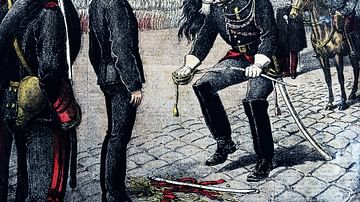
The Dreyfus Affair, or L'Affaire as it has become known, demonstrated the competing forces at work to either reestablish the monarchy and the Church in power or to solidify and advance the unfulfilled ideals of the 1789 French Revolution...

Definition
John Wycliffe
John Wycliffe (l. 1330-1384, also John Wyclif) was an English theologian, priest, and scholar, recognized as a forerunner to the Protestant Reformation in Europe. Wycliffe condemned the practices of the medieval Church, citing many of the...

Article
Six Great Heresies of the Middle Ages
The medieval Church established its monopoly over the spiritual life of Europeans in the Early Middle Ages (c. 476-1000) and consolidated that power throughout the High Middle Ages (1000-1300) and Late Middle Ages (1300-1500). Along the way...

Definition
Counter-Reformation
The Counter-Reformation (also known as the Catholic Reformation, 1545 to c. 1700) was the Catholic Church's response to the Protestant Reformation (1517-1648). It is usually dated from the Council of Trent in 1545 to the end of the Great...
Image
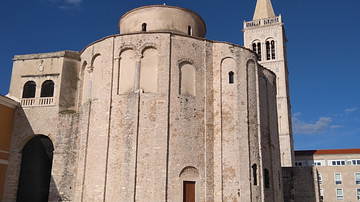
Church of St. Donatus, Zadar
The round church of St. Donatus in Zadar (ancient Iader) in modern-day Croatia was built on top of the ancient Roman forum in the 9th century. It was originally dedicated to the Holy Trinity, but in the 15th century, it was renamed to Saint...
