
Search
Remove Ads
Advertisement
Search Results
Definition
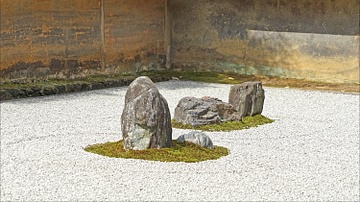
Ryoanji
Ryoanji (Ryōan-ji) is a Zen Buddhist temple in Kyoto, Japan which is today most famous for its Zen rock garden with its enigmatic arrangement of stones. Founded in the 15th century CE, the temple is one of the most visited tourist spots...

Definition
Mount Koya
Mount Koya (aka Koyasan), located in the Wakayama Prefecture, south of Osaka, Japan, is the site of a temple complex founded in 819 CE by the scholar monk Kukai as the headquarters for Shingon Buddhism. There are temples and sacred...

Definition
Balhae
The Balhae (Parhae) kingdom in Manchuria (698-926 CE) was an important regional power which interacted both peacefully and otherwise with its neighbours the Unified Silla Kingdom of Korea and Tang China. The latter was a strong cultural...
Definition
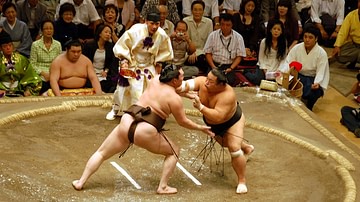
Sumo - Japan's Ancient Form of Wrestling
Sumo (Ozumo) is an ancient form of wrestling which has long been the national sport of Japan. Its origins go back to the Yayoi period (c. 300 BCE - c. 300 CE) and it incorporates many elements of the Shinto...

Definition
Himeji Castle
Himeji Castle, located in the town of Himeji in the Hyogo Prefecture of Japan, was built on a natural hilltop between 1581 and 1609 CE. The complex is composed of a maze-like arrangement of fortified buildings, walls, and gates...

Video
Samurai, the Medieval Japanese Warriors
Samurai were elite and highly skilled warriors that arose in the tenth century in Japan. They performed military service using a bow or swords of varying lengths and were essential components of Medieval Japanese...

Definition
Ignatius of Loyola
Ignatius of Loyola (l. 1491-1556) was a Basque soldier who became a Catholic priest and theologian after a mystical experience convinced him he was called to the service of Christ. He founded the Society of Jesus (Jesuits) to...

Definition
Estado da India
The Estado da India (1505-1961) was the name the Portuguese gave to that part of their empire which stretched from India to East Asia. However, in its widest sense, the name includes all Portuguese colonies east of the Cape of...

Article
LGBTQ+ in the Ancient World
In the cultures of the ancient world, there was no need for designations such as LGBTQ+ because there was no difference noted between what is now defined as "homosexual" and "heterosexual" relationships. There was no...
Definition
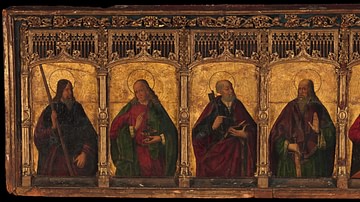
Acts of the Apostles
The Acts of the Apostles is the story of how the movement that became Christianity began in Jerusalem and spread throughout the Eastern Mediterranean cities of the Roman Empire. It was written by the same author as the third...
