
Search
Search Results

Definition
Berbers
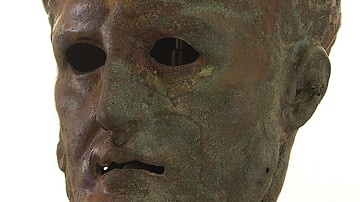
The Berbers have occupied North Africa, specifically the Maghreb, since the beginning of recorded history and until the Islamic conquests of the 8th century CE constituted the dominant ethnic group in the Saharan region. Modern Berber speakers...
Definition
Brundisium
Brundisium (modern Brindisi), located on the Adriatic coast of southern Italy, was a Messapian and then Roman town of great strategic importance throughout antiquity. Although architectural remains are sparse, the city has several claims...
Definition
Saguntum
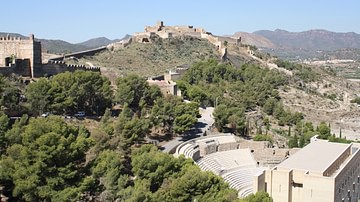
Saguntum (modern Sagunto), located near Valencia in Spain, was an Iberian, and then Roman, settlement. The town's most dramatic moment in history came in the late 3rd century BCE when it was attacked by Hannibal, an act which famously sparked...

Image
Hannibal and the Barcid Dynasty - Carthage’s Iberian Gamble
The Barcid Dynasty rose to prominence during the crisis years of the First and Second Punic Wars, shaping Carthaginian military strategy in the western Mediterranean (c. 275–203 BCE). In the aftermath of the First Punic War (264–241 BCE...
Definition
Titus Quinctius Flamininus
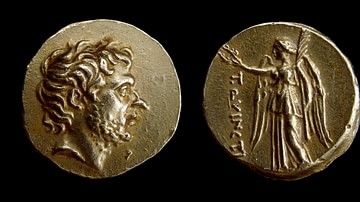
Titus Quinctius Flamininus (229-174 BCE) was a consul and military commander of the Roman Republic during the Second Macedonian War, who decisively defeated Philip V of Macedon (r. 221-179 BCE) at the Battle of Cynoscephalae in 197 BCE and...

Definition
Thugga
Thugga (also Dougga) was a town in North Africa which was first a Numidian and then a Carthaginian settlement before being incorporated into the Roman Empire. The town was built on a strategically favourable limestone hilltop overlooking...

Image
Hannibal Riding a War Elephant
An artist's impression of how Carthaginian general Hannibal may have appeared riding a war elephant.
Image
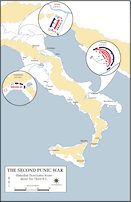
Hannibal's Major Battles in Italy
A map showing the location of three of the most important battles won by Carthaginian general Hannibal against Rome during the Second Punic War between 218 and 201 BCE. Lake Trasimene in June 217 BCE, Trebia River in December 218 BCE, and...

Image
Hamilcar Barca
Carthaginian silver dishekel. The head has been identified as Hamilcar Barca (c. 285 – c. 228 BCE). Minted in Carthago Nova, Spain, 237-227 BCE.
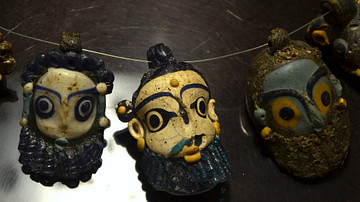
Image
Phoenician/Punic Necklace with Amulets
Phoenician or Carthaginian amulets in the form of bearded heads made of sand-core glass, 4th-3rd century BCE (Cagliari, Museo Archeologico Nazionale).
