
Search
Remove Ads
Advertisement
Search Results

Definition
Oedipus the King
Oedipus the King (429-420 BCE), also known as Oedipus Rex or Oedipus Tyrannos ('Tyrannos' signifies that the throne was not gained through an inheritance) is the most famous surviving play written by the 5th-century BCE poet and...

Video
The Role and Lives of Women in Ancient Egypt
In Ancient Egypt, compared to many other ancient cultures, women had it pretty well off. They were fairly equal in all things except for their occupations where men were in positions of authority like part...

Image
Greek Boxing
A boxing scene from an attic red-figure kylix (c. 500 BCE). Olympia Archaeological Museum.
Image
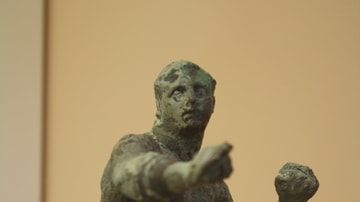
Greek Pankratiast
A bronze statue of a pankratiast (2nd century BCE). The leather thongs wrapped around the fist, worn by later exponents of this viiolent mix of wrestling and boixing, can be clearly seen. (Olympia Archaeological Museum, Olympia...

Image
Greek Chariot
A depiction of a chariot with charioteer on an attic black-figure kylix (510-500 BCE). Olympia Archaeological Museum.
Image
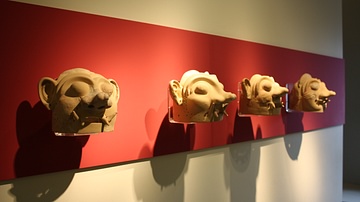
Greek Terracotta Masks
Terracotta ceremonial masks from Tiryns, 7th century BCE. Nafplio Archeaological Museum.
Image
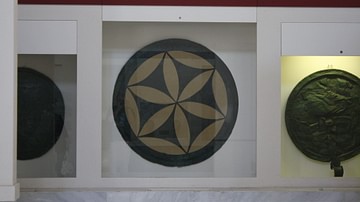
Greek Bronze Shield
Bronze shield from Olympia, 6th century BCE.
Olympia Archaeological Museum.

Image
Greek Foot Race
Attic black-figure column crater depicting a foot race (510-500 BCE). Olympia Archaeological Museum.

Definition
Cleopatra VII - The Last Great Pharaoh of Ancient Egypt
Cleopatra VII (69-30 BCE, reign 51-30 BCE) was the last ruler of Egypt before it was annexed as a province of Rome. Arguably the most famous Egyptian queen, Cleopatra was ethnically Greek as a member...

Image
Map of the Greek City-states c. 500 BCE
This map illustrates the city-states of Classical Greece around 500 BCE, highlighting the rise of the polis system and the growing reach of Hellenic influence along the Mediterranean and Black Sea coasts. The...
