
Search
Search Results

Definition
Mycenaean Art
The Mycenaean civilization flourished in the late Bronze Age from the 15th to the 13th century BCE, and their artists would continue the traditions passed on to them from Minoan Crete. Pottery, frescoes, and goldwork skillfully depicted scenes...

Definition
Saint Sophia Cathedral, Kyiv
Saint Sophia Cathedral in Kyiv, Ukraine is a monument of 11th-century architecture, painting, and mosaic work. The cathedral was named after Hagia Sophia and, as the main temple of the state, played the role of its spiritual, political and...

Definition
Bronze Age Aegean
The Bronze Age (c. 3000-1000 BCE) is the period when cultures were either using, producing, or trading bronze. Several cultures flourished around the Aegean Sea during this period: the Minoan civilization on Crete, the Mycenaean civilization...

Article
A Visitor's Guide to Pompeii
Visitors to Naples and its surrounding area could be overwhelmed by the number of archaeological wonders to see. Buried for centuries beneath tons of volcanic ash and debris, the archaeological sites scattered along the coast of Naples are...

Article
Archaeological Excavations at Tel Kabri
Tel Kabri is an archaeological site in northwestern Israel that is best known as the location of one of the largest palaces in Canaan in the Middle Bronze Age or "MB" (ca. 2,000–1,500 BCE). Although Tel Kabri reached the height of its power...
Definition
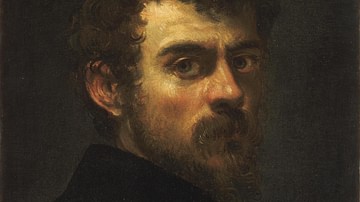
Tintoretto
Tintoretto (c. 1518-1594 CE), real name Jacopo Robusti, was an Italian Renaissance artist who specialised in religious, mythological, and portrait paintings. A prolific artist over a long career, the Venetian's masterpieces are famous for...

Definition
Ancient Greek Music
Music (or mousike) was an integral part of life in the ancient Greek world, and the term covered not only music but also dance, lyrics, and the performance of poetry. A wide range of instruments was used to perform music which was played...

Article
Patrons & Artists in Renaissance Italy
During the Renaissance, most works of fine art were commissioned and paid for by rulers, religious and civic institutions, and the wealthy. Producing statues, frescoes, altarpieces, and portraits were just some of the ways artists made a...

Article
Life in a Renaissance Artist's Workshop
The majority of great Renaissance works of art were produced in large and busy workshops run by a successful master artist and his team of assistants and apprentices. Here, too, more mundane art was produced in larger quantities to meet the...

Article
Death's Mansions: The Columbaria of Imperial Rome
A columbarium is an underground chamber, which the Romans used for preserving the ashes of the dead. During the 1st and 2nd centuries CE, hundreds of columbaria lined the consular highways leading out of Rome, although now only some two dozen...
