
Search
Remove Ads
Advertisement
Search Results

Article
Vikings in Wales
The Norse may have ruled parts of northern Wales in the early 11th century, specifically in Anglesey and Gwynedd, though the degree to which is unclear. Old Norse had relatively little impact on Welsh linguistics, and the Old...

Article
Dolmens of Ancient Korea
Dolmens (in Korean: koindol or chisongmyo) are simple structures made of monolithic stones erected during the late Neolithic period or Korean Bronze Age (1st millennium BCE). In ancient Korea they appear most often near...

Article
Cycladic Sculpture
The Cycladic islands of the Aegean were first inhabited by voyagers from Asia Minor around 3000 BCE and a certain prosperity was achieved thanks to the wealth of natural resources on the islands such as gold, silver, copper...

Article
Inca Textiles
For the Incas finely worked and highly decorative textiles came to symbolize both wealth and status, fine cloth could be used as both a tax and currency, and the very best textiles became amongst the most prized of all possessions...

Article
Norse-Viking Symbols & Meanings
A symbol is an image or object which represents an abstract concept, often having to do with one's religious beliefs. Every civilization, from the most ancient to the present, has made use of symbols to make the abstract...
Article
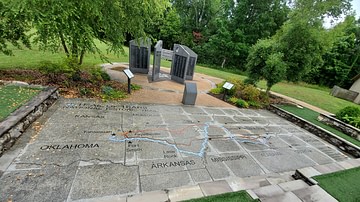
A Soldier Recalls the Trail of Tears: John G. Burnett Account - A Primary Source Hoax
The Trail of Tears was a series of forced relocations of the "Five Civilized Tribes" – the Choctaw, Seminole, Muscogee Creek, Chickasaw, and Cherokee – between 1831 and 1850...

Article
The Art of the Amarna Period
Of all the pharaohs who ruled ancient Egypt, there is one in particular that stands out from the rest. Over the course of his 17-year reign (1353-1336 BCE), Akhenaten spearheaded a cultural, religious, and artistic revolution...
Article
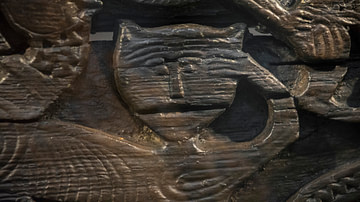
Norse Pets in the Viking Age
Pets were as important to the Norse of the Viking Age (c. 790-1100 CE) as they were to any other culture, past or present. The Vikings kept dogs and cats as pets and both feature in Norse religious iconography and literature...
Article
Celtic Feasts
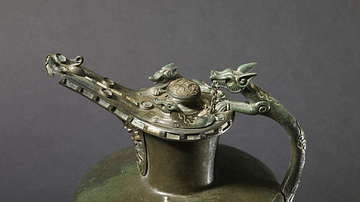
Feasts were an important part of ancient Celtic culture which marked important dates in the calendar and community successes. They were, too, an opportunity to display social status and, of course, eat and drink aplenty. Drunkenness...

Article
The Punic Necropolis of Mahdia
The Punic funerary remains of Mahdia, a series of tombs carved into the rock, date back to a period between the 5th and the 2nd century BCE and are located in the northeast of Tunisia. These tombs are useful for us...
