
Search
Remove Ads
Advertisement
Search Results
Definition
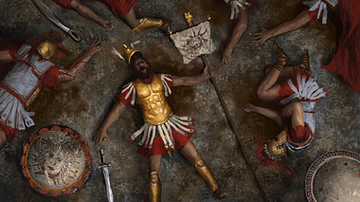
Pelopidas
Pelopidas (c. 410 - 364 BCE) was a gifted Theban general and leader of the elite Sacred Band who, along with Epaminondas, is credited with helping Thebes rise to its greatest power. Defeating the mighty Spartans in several battles...
Image
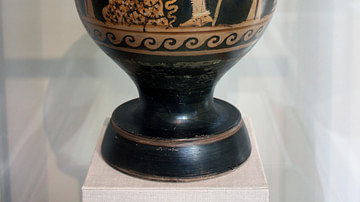
Oedipus & the Theban Sphinx
Bell-Krater (mixing bowl) depicting the Theban Sphinx and Oedipus in the guise of a satyr. Greek, South Italian, Paestan, red-figure, 3rd quarter of the 4th century BCE. Attributed to Python. (Metropolitan Museum of...
Image
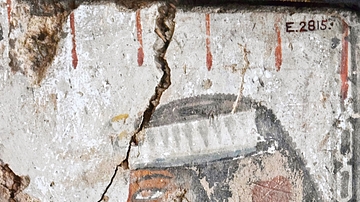
Painted Fragment of a Theban Woman
This painted fragment from ancient Egypt depicts a woman from the city of Thebes. It was likely painted on stone c. 1300 BCE. (Musée du Cinquantenaire, Brussels)

Article
Selja Monastery - The Sacred Island off the West Coast of Norway
Selja monastery has been considered one of the most sacred sites in Norway for more than 1000 years. The monastery is connected to the legend of St. Sunniva (10th century CE), who is the...
Image
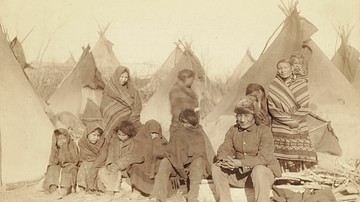
What's Left of Big Foot's Band - Wounded Knee Massacre Survivors
Photo known as "What's Left of Big Foot's Band" by John C. H. Grabill, January 1891, showing the surviving members of the people of Lakota Sioux Chief Spotted Elk (also known as Big Foot...
Image
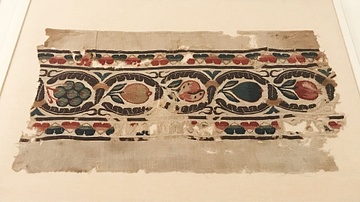
Coptic Fruited Medallion Scroll Band
This fruited medallion scroll band was made by the Coptic people of Egypt while under Byzantine occupation (330-641 CE). It is made of wool and linen, and dates from the 7th century CE. (Iris & B. Gerald Cantor...

Definition
Karnak
Karnak is the modern-day name for the ancient site of the Temple of Amun at Thebes, Egypt. The Egyptians called the site Nesut-Towi, "Throne of the Two Lands", Ipet-Iset, "The Finest of Seats" as well as Ipt-Swt, "Selected Spot" also...

Definition
Thebes (Greece)
Thebes is a town in central Greece which has been continuously inhabited for five millennia. It was an important Mycenaean centre in the middle to late Bronze Age and was a powerful city-state in the Classical period, participating...

Article
Sioux Ceremonial Pipe
The Sioux ceremonial pipe is a sacred object of the Sioux nation used in the seven sacred rites as well as other observances to connect the people with the Great Spirit (Wakan Tanka), Mother Earth, the spirit world, and each...

Definition
Thebes (Egypt)
Thebes was the capital of Egypt during the period of the New Kingdom (c.1570-c.1069 BCE) and became an important center of worship of the god Amun (also known as Amon or Amen, a combination of the earlier gods Atum and Ra). Its...
