
Search
Remove Ads
Advertisement
Search Results

Article
Fall of the East India Company
The British East India Company (1600-1874) was the largest and most successful private enterprise ever created. All-powerful wherever it colonised, the EIC's use of its own private army and increasing territorial control...

Article
The Pre-WWI Alliance System - Triple Entente v. Triple Alliance
The alliance system in Europe was one of the causes of the First World War (1914-18), although it did not make war inevitable. In the first decade of the 20th century, the Triple Entente powers...

Article
Enemies of Rome in the 3rd Century CE - The Greatest Enemy of Rome was Rome Itself
It has been said that the greatest enemy of Rome was Rome itself, and this is certainly true of the period known as the Crisis of the Third Century (also known as the Imperial...

Article
Battle of Carrhae, 53 BCE
The Battle of Carrhae in 53 BCE was one of the greatest military catastrophes in all of Roman history when a hero of the Spartacus campaign, Marcus Licinius Crassus (115-53 BCE), initiated an unprovoked invasion of Parthian...

Article
Weapons of the Conquistadors
The Iberian conquistadors ("conquerors") were the first military men to explore, attack, and conquer territories in the Americas and Asia that would then become a part of the Spanish or Portuguese Empire. Indigenous...

Article
Why Did Hitler Attack the USSR?
Adolf Hitler (1889-1945), the leader of Nazi Germany, was intent on attacking the USSR in the summer of 1941. With Western Europe subdued in 1940, Hitler could finally pursue his dream of territorial expansion in the...

Article
Hitler's Occupation of Czechoslovakia
Throughout 1938, Adolf Hitler (1889-1945), the leader of Nazi Germany, threatened to occupy the Sudetenland region of Czechoslovakia. The excuse presented was that Sudeten Germans were being repressed but Hitler...

Article
Siege of Leningrad
The siege of Leningrad (Saint Petersburg) began during Operation Barbarossa, the invasion of the USSR launched by the leader of Nazi Germany, Adolf Hitler (1889-1945), during the Second World War (1939-45). The siege or blockade...

Article
The Invasion of Poland in 1939
The leader of Nazi Germany Adolf Hitler (1889-1945) ordered the invasion of Poland on 1 September 1939. Hitler's refusal to withdraw brought a declaration of war from Britain and France on 3 September, and so began...
Definition
War in Ancient Times
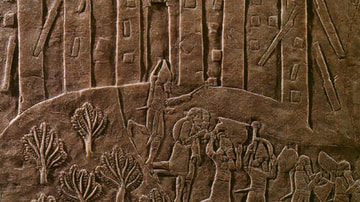
The word 'war' comes to English from the old High German language word Werran (to confuse or to cause confusion) through the Old English Werre (meaning the same), and is a state of open and usually declared armed conflict...
