
Search
Remove Ads
Advertisement
Search Results
Definition
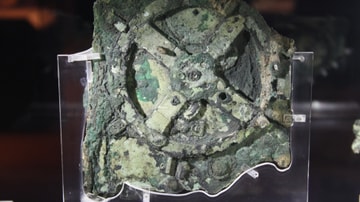
Science
The term science comes from the Latin word scientia, meaning "knowledge". It can be defined as a systematic attempt to discover, by means of observation and reasoning, particular facts about the world, and to establish laws connecting...

Definition
Anaximenes
Anaximenes of Miletus (l. c. 546 BCE) was a younger contemporary of Anaximander and generally regarded as his student. Known as the Third Philosopher of the Milesian School after Thales (l. c. 585 BCE) and Anaximander (l. c. 610 -...

Definition
Yamm
Yamm (from the Semitic word yam for 'sea', also known as Yam and Yam-Nahar) was the god of the sea and storm in the pantheon of the Canaanite-Phoenicians. Depicted consistently as tyrannical, angry, violent, and harsh, Yamm was the brother...

Definition
Eleusis
Eleusis was a deme of Athens and most famous for its annual festival of the Mysteries in honour of Demeter and Persephone. The site was also an important fortress protecting Attica and held several other important festivals, notably...

Definition
Battle of the Granicus
The Battle of the Granicus in May 334 BCE was Alexander the Great's (356-323 BCE) first major victory against the forces of the Achaemenid Empire. Alexander had crossed the Hellespont with his combined Macedonian and Greek...

Definition
Greek Colonization
From around 800 BCE, ancient Greek city-states, most of which were maritime powers, began to look beyond Greece for land and resources. As a consequence, they founded colonies across the Mediterranean. Trade was usually the...

Definition
Semiramis
Semiramis is a legendary queen thought to based on the historical Sammu-Ramat (r. 811-806 BCE) the queen regent of the Assyrian Empire who held the throne for her young son Adad Nirari III until he reached maturity. She is also known...
Definition
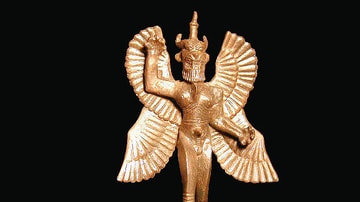
Pazuzu - The Mesopotamian Demon of Destruction and Protection
Pazuzu is a Babylonian/Assyrian demon who was most popular in the first millennium BCE. He was the son of Hanbi (also Hanba), king of the demons of the underworld, and brother of Humbaba, the...

Definition
Gaia
Gaia (also Gaea or Ge) is a primordial goddess and the personification of the Earth in Greek mythology. Gaia emerged from Chaos and is considered the supreme or mother goddess by immortals and mortals alike. All gods and goddesses are...
Definition
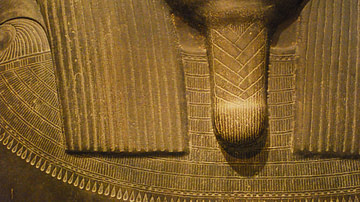
Phoenician Government
The governments of such Phoenician cities as Tyre, Sidon, and Byblos were led by hereditary monarchs throughout their history. Those individual cities typically acted autonomously from each other and only rarely did they form...
