
Search
Remove Ads
Advertisement
Search Results

Definition
Battle of the Granicus
The Battle of the Granicus in May 334 BCE was Alexander the Great's (356-323 BCE) first major victory against the forces of the Achaemenid Empire. Alexander had crossed the Hellespont with his combined Macedonian and Greek...

Definition
Greek Colonization
From around 800 BCE, ancient Greek city-states, most of which were maritime powers, began to look beyond Greece for land and resources. As a consequence, they founded colonies across the Mediterranean. Trade was usually the...

Definition
Semiramis
Semiramis is a legendary queen thought to based on the historical Sammu-Ramat (r. 811-806 BCE) the queen regent of the Assyrian Empire who held the throne for her young son Adad Nirari III until he reached maturity. She is also known...
Definition
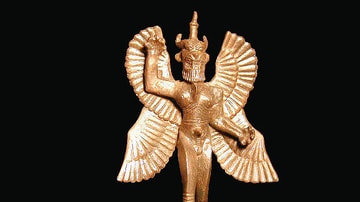
Pazuzu - The Mesopotamian Demon of Destruction and Protection
Pazuzu is a Babylonian/Assyrian demon who was most popular in the first millennium BCE. He was the son of Hanbi (also Hanba), king of the demons of the underworld, and brother of Humbaba, the...

Definition
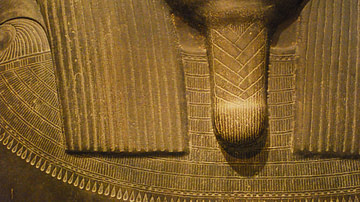
Gaia
Gaia (also Gaea or Ge) is a primordial goddess and the personification of the Earth in Greek mythology. Gaia emerged from Chaos and is considered the supreme or mother goddess by immortals and mortals alike. All gods and goddesses are...
Definition
Phoenician Government
The governments of such Phoenician cities as Tyre, Sidon, and Byblos were led by hereditary monarchs throughout their history. Those individual cities typically acted autonomously from each other and only rarely did they form...

Definition
Wars of the Diadochi
On June 10, 323 BCE Alexander the Great died in Babylon. Although historians have debated the exact cause most agree that the empire he built was left without adequate leadership for there was no clear successor or heir. The...

Definition
Etruscan Art
The art of the Etruscans, who flourished in central Italy between the 8th and 3rd century BCE, is renowned for its vitality and often vivid colouring. Wall paintings were especially vibrant and frequently capture scenes of Etruscans...

Definition
Chauvet Cave
The Chauvet Cave (also known as the Chauvet-Pont-d'Arc Cave) is a Palaeolithic cave situated near Vallon-Pont-d'Arc in the Ardèche region of southern France that houses impeccably preserved, exquisite examples of prehistoric art...
Definition
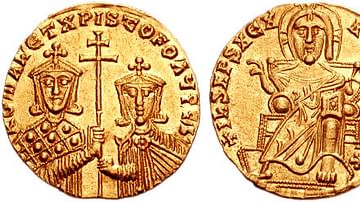
Romanos I
Romanos I Lekapenos (“the Ignorant”) was emperor of the Byzantine Empire from 920 to 944 CE. Of Armenian descent, he was a military commander who usurped the throne to rule as co-emperor with the rightful heir, but still minor, Constantine...
