
Search
Remove Ads
Advertisement
Search Results

Definition
Egyptian Medicine
Medical practice in ancient Egypt was so advanced that many of their observations, policies, and commonplace procedures would not be surpassed in the west for centuries after the fall of Rome and their practices would inform...
Definition
Chacchoben
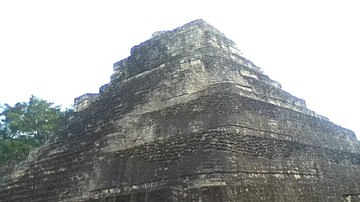
Chacchoben (pronounced chac-CHO-bin) is a Maya site dated to c. 700 located in the state of Quintana Roo, Mexico. Once a large and significant urban religious center, the city was abandoned c. 900-950 CE at about the same time as...

Definition
Ancient Egyptian Government
The government of ancient Egypt was a theocratic monarchy as the king ruled by a mandate from the gods, initially was seen as an intermediary between human beings and the divine, and was supposed to represent the gods'...

Definition
Narmer Palette
The Narmer Palette (also known as Narmer's Victory Palette and the Great Hierakonpolis Palette) is an Egyptian ceremonial engraving, a little over two feet (64 cm) tall and shaped like a chevron shield, depicting the First Dynasty...

Definition
Tezcatlipoca - The Greatest of Aztec Gods
Tezcatlipoca (pron. Tez-ca-tli-po-ca) or 'Smoking Mirror' in Nahuatl was one of the most important gods in Postclassical Mesoamerican culture and particularly important for the Toltecs and the Aztecs, especially...

Definition
Mesopotamia - The Beginning of Beginnings
Mesopotamia (from the Greek, meaning "between two rivers") was an ancient region located in the Near East (Middle East) bounded in the northeast by the Zagros Mountains and in the southeast by the Arabian Plateau...

Definition
Ghosts in Ancient Egypt
A text known as The Lay of the Harper, dating from the Middle Kingdom (2040-1782 BCE) encourages its audience to make the most of the time because death is a certainty: Make a holiday! And do not tire of playing! For no...

Article
The Temple of Hatshepsut
Among the duties of any Egyptian monarch was the construction of monumental building projects to honor the gods and preserve the memory of their reigns for eternity. These building projects were not just some grandiose...

Article
Mummification in Ancient Egypt
The practice of mummifying the dead began in ancient Egypt c. 3500 BCE. The English word mummy comes from the Latin mumia which is derived from the Persian mum meaning 'wax' and refers to an embalmed corpse which was...
Article
The Soul in Ancient Egypt
At the beginning of time, the god Atum stood on the primordial mound in the midst of the waters of chaos and created the world. The power which enabled this act was heka (magic) personified in the god Heka, the invisible...
