
Search
Remove Ads
Advertisement
Search Results

Definition
Critias
Critias (l. c. 460-403 BCE) was an Athenian politician, poet, and playwright, one of Socrates' followers, Plato's second cousin, a leading member of the Thirty Tyrants of Athens, and leader of the oligarchy they established. He is referenced...

Definition
Corinth
Corinth was a Greek, Hellenistic and Roman city located on the isthmus which connects mainland Greece with the Peloponnese. Surrounded by fertile plains and blessed with natural springs, ancient Corinth was a centre of trade, had a naval...

Definition
Ancient Argos
Ancient Argos, located in the Peloponnese in Greece, was a major Mycenaean settlement in the Late Bronze Age (1700-1100 BCE) and remained important throughout the Greek, Hellenistic, and Roman periods until its destruction by the...

Definition
Brundisium
Brundisium (modern Brindisi), located on the Adriatic coast of southern Italy, was a Messapian and then Roman town of great strategic importance throughout antiquity. Although architectural remains are sparse, the city has several...

Article
Battle of Teutoburg Forest
At the Battle of Teutoburg Forest (aka Battle of Varus), c. 9 CE, a combined force of Germans annihilated a Roman army consisting of three legions including three squadrons of cavalry and six cohorts of auxiliary troops...

Article
Roman Warfare in the Age of Pyrrhus
The Roman army fought many conflicts throughout its long history, though perhaps none so indelible as the Pyrrhic War from 280 to 275 BCE. This war between Rome and a league of Greek colonies in southern Italy...

Image
King Frederick and His Army After the Battle of Leuthen
King Frederick the Great and his soldiers on the night after their climactic victory at the Battle of Leuthen (December 1757), oil on canvas by Wilhelm Camphausen, 1864. Sanssouci Palace, Brandenburg...
Image
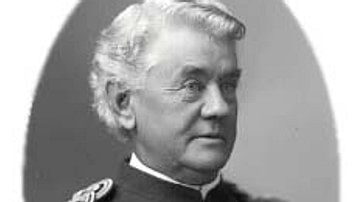
Frederick Benteen, US Army Officer
Frederick Benteen (l. 1834-1898) in his later years. He served with Lt. Colonel George Armstrong Custer and was present at the Washita Massacre (1868) and the Battle of the Little Bighorn (1876).

Image
Army of Attila the Hun
An artist's impression of how the armies of Attila the Hun (r. 434-453 CE) may have looked.

Image
Queen Fredegund and a Young Chlothar II at the Head of an Army
Queen Fredegund rides into battle with her son, the boy king Chlothar II (r. 584-629) on her lap. Illustration from the manuscript Grand Chronicles of France. Bibliothèque municipale de Lyon...
