
Search
Remove Ads
Advertisement
Search Results
Article
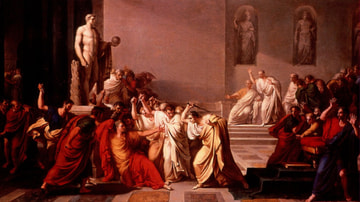
The Assassination of Julius Caesar
Veni, vidi, vici! This was the simple message the Roman commander Julius Caesar sent to the Senate in Rome after a resounding victory in the east against King Pharnaces of Pontus - a message that demonstrated both...

Image
Roman Soldier Guards a Captured Gaul
This is a terracotta relief. Captured weapons and a cloak hang on a tree as a trophy (symbol of victory). The stamped inscription M(arcus) Anton(ius) Epaphra(s) refers to the workshop producing the plaque. Made...
Image
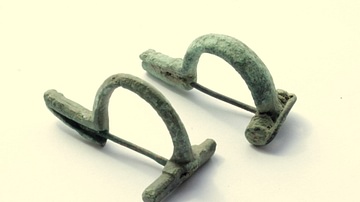
Roman Fibulae
Two P-shape bronze fibulae. 2nd-3rd century CE. Provenance unknown. (private collection)
Definition
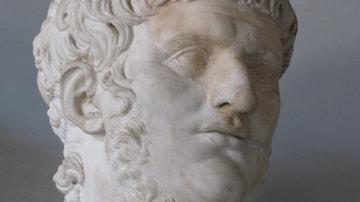
Nero - The Artist Emperor
Nero (37-68 CE) was the fifth Roman emperor, who reigned from 54 to 68 CE. The last emperor of the Julio-Claudian Dynasty, he came to power at the age of 16 with the help of his mother, Agrippina the Younger. Initially...

Definition
Trajan's Column
Trajan's column, erected in 113 CE, stands in Trajan's Forum in Rome and is a commemorative monument decorated with reliefs illustrating Roman emperor Trajan's two military campaigns in Dacia (modern Romania). The column was the...

Definition
Legio II Augusta
Legio II Augusta was a legion of the Roman army that, throughout its centuries-long history, had fought in the Cantabrian Wars of 29-19 BCE, Germanicus' German campaigns in 9 CE, the invasion of Britain in 43 CE, and Septimus...

Definition
Vestal Virgin
Vestal Virgins (Latin: Vestales) were the priestesses of the Roman goddess of the hearth, Vesta, in the state religion of ancient Rome. At varying times there were four to six priestesses employed. They were the only full-time clergy...

Definition
Plebeians
Plebeians were members of the plebs, the hereditary social class of commoners in ancient Rome. Their exclusion from political power by the patricians, who claimed to be the descendants of the first senators, led to Conflict of the...

Article
Trade in Ancient Greece
Trade was a fundamental aspect of the ancient Greek world and following territorial expansion, an increase in population movements, and innovations in transport, goods could be bought, sold, and exchanged in one part of...

Article
Food & Agriculture in Ancient Greece
The prosperity of the majority of Greek city-states was based on agriculture and the ability to produce the necessary surplus which allowed some citizens to pursue other trades and pastimes and to create a quantity...
