
Search
Remove Ads
Advertisement
Search Results

Definition
Zhou Dynasty
The Zhou Dynasty (1046-256 BCE) was among the most culturally significant of the early Chinese dynasties and the longest lasting of any in China's history, divided into two periods: Western Zhou (1046-771 BCE) and Eastern Zhou (771-256...
Definition
Pankration
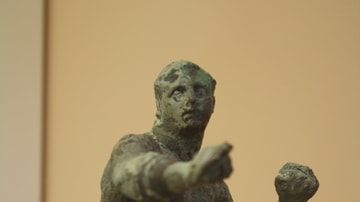
Pankration is an ancient martial art which mixes wrestling and boxing. The sport can be traced as far back as the second millennium BCE in the territory of ancient Greece. Its name derives from the ancient Greek words pan (all) and...

Definition
Ancient Egyptian Government
The government of ancient Egypt was a theocratic monarchy as the king ruled by a mandate from the gods, initially was seen as an intermediary between human beings and the divine, and was supposed to represent the gods'...

Definition
Atalanta - The Huntress of Greek Mythology
Atalanta is a figure from Greek mythology famed as a huntress, wrestler, and runner. The heroine was a key participant in the Calydonian boar hunt, striking the first wound in this fearsome beast with her bow...

Definition
Eros
Eros was the Greek god of love, or more precisely, passionate and physical desire. Without warning Eros selects his targets and forcefully strikes at their hearts, bringing confusion and irrepressible feelings. In the words of Hesiod...

Definition
Siren - The Woman-Bird Creatures of Greek Mythology
Sirens were creatures from Greek mythology that enticed sailors to their destruction with their irresistibly beautiful singing. The most famous appearance of sirens in literature is in Homer's Odyssey...

Definition
Three Kingdoms Period in Korea
The Three Kingdoms Period of ancient Korea (57 BCE – 668 CE) is so-called because it was dominated by the three kingdoms of Baekje (Paekche), Goguryeo (Koguryo), and Silla. There was also, though, a fourth entity...

Definition
Hephaistos
Hephaistos (Hephaestus) was the ancient Greek god of fire, metallurgy, and crafts. He was the brilliant blacksmith of the Olympian gods, for whom he fashioned magnificent houses, armour, and ingenious devices. Hephaistos had his workshop...

Article
Renaissance Altarpieces
During the Renaissance (1400-1600) just about any artist of worth found themselves commissioned at some point in their careers to produce an altarpiece. Some of the greatest names in European art were so called upon, from...

Definition
Urartu Religion
The religion of the Urartu civilization, which flourished principally in ancient Armenia from the 9th to 6th century BCE, was a unique mix of indigenous, Hurrian and Mesopotamian gods and symbolism. The pantheon was headed by...
