
Search
Remove Ads
Advertisement
Search Results

Definition
Frederick the Great - Forging the Prussian State
Frederick II of Prussia (1712-1786), better known as Frederick the Great, was one of the most consequential rulers of 18th-century Europe. A scion of the House of Hohenzollern, he came to power in 1740...

Definition
Ancient Celts
The ancient Celts were various tribal groups living in parts of western and central Europe in the Late Bronze Age and through the Iron Age (c. 700 BCE to c. 400 CE). Given the name Celts by ancient writers, these tribes and their...

Definition
Nebuchadnezzar II
Nebuchadnezzar II (r. 605/604-562 BCE) was the greatest King of ancient Babylon during the period of the Neo-Babylonian Empire (626-539 BCE), succeeding its founder, his father, Nabopolassar (r. 626-605 BCE). He is best known...

Definition
Spanish Main
The Spanish Main refers, in its widest sense, to the Spanish Empire in the Americas from Florida in the north to the northern coast of Brazil in the south, including the Caribbean. The term was initially more limited and referred...

Definition
Bucephalus
Bucephalus was Alexander the Great's horse and is considered by some to be the most famous horse in history. Alexander and Bucephalus' initial meeting was unique but demonstrated the true character of one of the greatest generals...

Definition
Chandragupta II
Chandragupta II (c. 375 CE - 413/14 CE) was the next great Gupta emperor after his father Samudragupta (335/350 - 370/380 CE). He proved to be an able ruler and conqueror with many achievements to his credit. He came to be known...
Definition
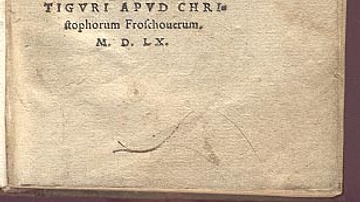
De Officiis
De Officiis is a treatise written by Marcus Tullius Cicero (106 – 43 BCE), Roman statesman and orator, in the form of a letter to his son just after the death of Julius Caesar in 44 BCE. Strongly influenced by stoicism, De Officiis...

Definition
Maukhari Dynasty
The Maukharis (554 CE - 606 CE) rose as a power after the downfall of the Gupta Empire (3rd to 6th century CE) in the 6th century CE in northern India. The core area of their kingdom was situated in what is now the state of Uttar...

Definition
Avesta
The Avesta is the scripture of Zoroastrianism which developed from an oral tradition founded by the prophet Zoroaster (Zarathustra, Zartosht) sometime between c. 1500-1000 BCE. The title is generally accepted as meaning “praise”, though...

Definition
Ottoman Empire
The Ottoman Sultanate (1299-1922 as an empire; 1922-1924 as caliphate only), also referred to as the Ottoman Empire, written in Turkish as Osmanlı Devleti, was a Turkic imperial state that was conceived by and named after Osman...
