
Search
Remove Ads
Advertisement
Search Results

Definition
Charles V, Holy Roman Emperor
Charles V, Holy Roman Emperor (24 February 1500 to 21 September 1558) reigned from 1519 until his abdication in 1556 and was one of the most powerful rulers in the history of the Habsburg dynasty. Through a series of...

Definition
Babylon - The Gate of the Gods
Babylon is the most famous city from ancient Mesopotamia, whose ruins lie in modern-day Hillah, Iraq, 59 miles (94 km) southwest of Baghdad. The name is derived from bav-il or bav-ilim, which in Akkadian meant "Gate...

Definition
Migration Age
The Migration Period, also called the Barbarian Invasions or German: Völkerwanderung (wandering of the peoples), was a period of human migration that occurred roughly between 300 to 700 CE in Europe, marking the transition from...

Definition
Agrippina the Younger
Julia Agrippina or Agrippina the Younger (6 November 15 - 19/23 March 59 CE) was a prominent woman during the early Roman Empire, niece to Tiberius (r. 14-37 CE) and Claudius (41-54 CE), whom she married, sister of Caligula...
Definition
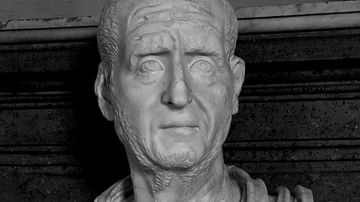
Decius
Decius was Roman emperor from 249 to 251 CE. In 249 CE Roman emperor Philip the Arab sent senator Decius to be the governor of the troubled provinces of Moesia and Pannonia. Roman legions under the ineffective command of the governor...

Definition
The Saxons
The Saxons were a Germanic people of the region north of the Elbe River stretching from Holstein (in modern-day Germany) to the North Sea. The Saxons who migrated to Britain in the 5th and 6th centuries CE along with the Angles, Frisians...

Definition
Etruscan Art
The art of the Etruscans, who flourished in central Italy between the 8th and 3rd century BCE, is renowned for its vitality and often vivid colouring. Wall paintings were especially vibrant and frequently capture scenes of Etruscans...

Definition
Crusades
The Crusades were a series of military campaigns organised by popes and Christian western powers to take Jerusalem and the Holy Land back from Muslim control and then defend those gains. There were eight major official crusades between...

Definition
Edward the Elder
Edward the Elder (r. 899-924) was the son of Alfred the Great (r. 871-899) and the King of the Anglo-Saxons in the early 10th century. He is known for his military victories over the Vikings of East Anglia and the East Midlands...

Definition
Saladin
Saladin (1137-93) was the Muslim Sultan of Egypt and Syria (r. 1174-1193) who shocked the western world by defeating an army of the Christian Crusader states at the Battle of Hattin and then capturing Jerusalem in 1187. Saladin all but...
