
Search
Remove Ads
Advertisement
Search Results

Definition
Bronze Age Collapse - The Decline and Fall of Mediterranean Civilization
The Bronze Age Collapse (also known as Late Bronze Age Collapse) is a modern-day term referring to the decline and fall of major Mediterranean civilizations during the 13th-12th centuries...

Image
Mycenaean Death Mask
A gold death mask from a Shaft Grave IV, Grave Circle A, Mycenae, 1600-1500 BCE.
(National Archaeological Museum, Athens).

Image
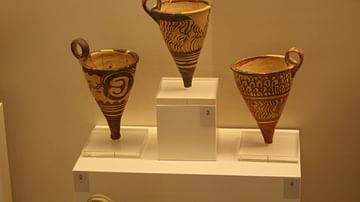
Mycenaean Gold Jewellery Pieces
Strings of gold beads in the form of rosettes, papyrus and lillies from Mycenae area (14th century BCE). Nafplio Archaeological Museum.
Image
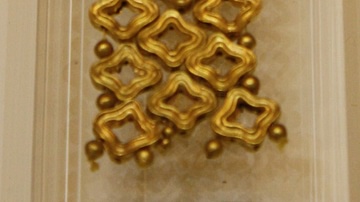
Mycenaean Rhyta
Three conical shaped rhyta (1500-1450 BCE) Mycenae area, Nafplio Archaeological Museum.
Image
Mycenaean Beaded Bracelet
A string of gold beads (1500-1350 BCE) from Mycenae. Nafplio Archaeological Museum.

Image
Mycenaean Goddess
Terracotta figure of a goddess, Medea. Tiryns, 13th century BCE.

Image Gallery
A Gallery of Assyrian Warfare
The Assyrian military was the most effective – and feared – fighting force in the Near East, especially during the time of the Neo-Assyrian Empire, 912-612 BCE, when their territory expanded across Mesopotamia, the...

Image
Bronze & Gold Mycenaean Sword
A bronze Mycenaean sword with a gold handle inlaid with lapis lazuli, from Mycenae, Grave IV, Grave Circle A, 16th century BCE.
National Archaeological Museum, Athens.
Image
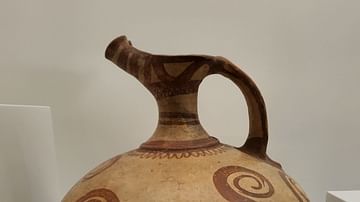
Mycenaean Beak-Sprouted Jug
The vessel is decorated with stylised argonauts or nautili (molluscs). This outstanding example of the mature phase of Mycenaean pottery presumably imitates a metal prototype. Perhaps from Attica, Late Helladic IIIA1...
Image
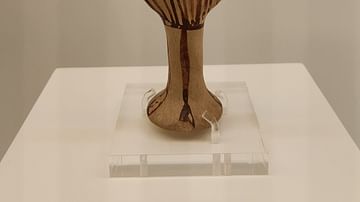
Mycenaean Female Figurine of Phi Φ Type
This type of Mycenaean figurine is named after the similarity of its outlines to the letter Φ of the Greek alphabet. These figurines are usually found in Children's graves or in shrines and they might have represented...
