
Search
Did you mean: Texcoco?
Remove Ads
Advertisement
Search Results
Image
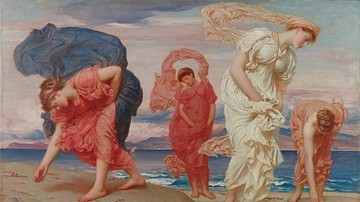
Greek Girls Picking up Pebbles by the Sea by Frederic Leighton
Greek Girls Picking up Pebbles by the Sea, oil on canvas by Frederic Leighton, 1871.
Collection Pérez Simón, Mexico
Image
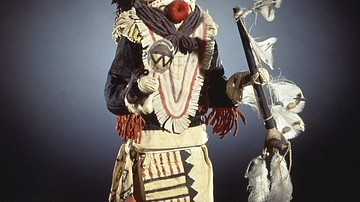
Zuni Kachina Doll
She-we-na (Zuni Pueblo). Kachina doll (Paiyatemu), made of wood, pigment, horsehair, feathers, wool, hide, cotton, tin, ribbon, 22 1/2 x 9 x 8 in. (57.2 x 22.9 x 20.3 cm), from Zuni, New Mexico, late 19th century. Brooklyn Museum...

Image
Coatlicue
A colossal basalt statue of Coatlicue ('Serpent Skirt'), the Aztec mother-earth goddess and mother of Huitzilopochtli. The goddess is represented with a severed head replaced by two snake heads, wearing a necklace of severed hands...

Image
Aztec Empire
A map indicating the maximum extent of the Aztec civilization which flourished between c. 1345 and 1521 CE in what is now Mexico. The three major cities which formed the Aztec Triple Alliance were Tenochtitlan, Texcoco and Tlacopan...

Image
The Caracol, Chichen Itza
The Caracol or Observatory of Chichen Itza, Mexico. Constructed prior to 800 CE, this Maya building was used as an astronomical observatory, especially of Venus.

Image
El Tajin
The central plaza of El Tajin, Veracruz, Mexico. The 6th century CE Pyramid of the Niches is on the right.

Image
Greenstone Mask, Teotihuacan
One of many surviving examples of Teotihuacan masks. This example was taken to Tenochtitlan by the Aztecs and buried within the Templo Mayor. They were originally used for statues and mummy bundles. Greenstone, shell...

Image
Zapotec Priest Figure
A ceramic figure-vessel representing a priest of the Zapotec civilization. Oaxaca, Mexico, 250-600 CE. The figure wears a mask, feathered headdress, and a medallion which represents a maize field. (St. Louis Art Museum, Missouri...

Image
Tlaltecuhtli
A stone sculpture representing Tlaltecuhtli, the Aztec earth-fertility goddess. Excavated in the Templo Mayor area of Tenochtitlan (Mexico City)

Video
Aztec and Mayan Are Totally Different Languages. Sort of
Ancient Mexico was a hotbed of language mixing. Aztecs and Maya spoke completely unrelated languages, but a Mesoamerican linguistic mindmeld tied them together in surprising ways. Here's the grammar...
