
Search
Remove Ads
Advertisement
Search Results

Definition
Saga
The Old Norse word saga means 'story', 'tale' or 'history' and normally refers specifically to the epic prose narratives written mainly in Iceland between the 12th- and 15th centuries CE, covering the country's history as well as Scandinavia's...
Definition
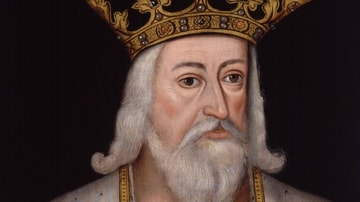
Edward III of England
Edward III of England reigned as king from 1327 to 1377. Succeeding his father Edward II of England (r. 1307-1327) following his enforced abdication and then murder, Edward III would take revenge on his father's enemies, who...

Definition
Hanseatic League
The Hanseatic League (also known as Hansa, Hanse, 1356-1862 CE) was a federation of north German towns and cities formed in the 12th century CE to facilitate trade and protect mutual interests. The league was centered in the German...

Definition
Chepstow Castle - Britain's Oldest Stone Castle
Chepstow Castle, located in Monmouthshire, South Wales, was first built c. 1067 by William FitzOsbern and then significantly improved c. 1190 by Sir William Marshal (c. 1146-1219), one of England's greatest...

Definition
Geoffrey Chaucer
Geoffrey Chaucer (l. c. 1343-1400 CE) was a medieval English poet, writer, and philosopher best known for his work The Canterbury Tales, a masterpiece of world literature. The Canterbury Tales is a work of poetry featuring a group...

Article
The Portuguese Colonization of Cape Verde
The Portuguese colonization of the Cape Verde (Cabo Verde) Islands began from 1462. Initially envisaged as a base to give mariners direct access to West African trade, the Central Atlantic islands soon became...

Definition
Noh Theatre
Noh (Nō) theatre is a Japanese performance art which became especially popular from the 14th century CE and which is still performed today. Noh actors, who were always male in the medieval period, famously move and make gestures in...

Definition
Battle of Agincourt
The Battle of Agincourt on 25 October 1415 saw Henry V of England (r. 1413-1422) defeat an overwhelmingly larger French army during the Hundred Year's War (1337-1453). The English won thanks to the superior longbow, field position...

Definition
King Arthur
King Arthur is among the most famous literary characters of all time. The Arthurian legend of the Knights of the Round Table, Camelot, the Quest for the Holy Grail, the love affair of Lancelot and Guinevere, and the wizard Merlin...

Definition
First Agricultural Revolution
The First Agricultural Revolution, beginning c. 12-20,000 years ago, was characterized by the emergence of different agricultural systems in different parts of the world, whose common trait was the use of native species...
