
Search
Did you mean: Empire?
Remove Ads
Advertisement
Search Results
Definition
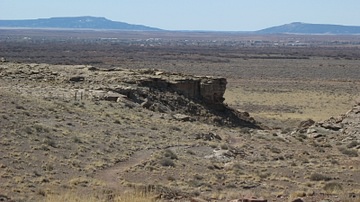
Homolovi
Homolovi or Homolovi State Park (formerly: Homolovi Ruins State Park) is a cluster of archaeological sites that contains the ruins of eight pre-Columbian Ancestral Puebloan (Anasazi) and Hopi pueblos in addition to some 300 other remains...
Image
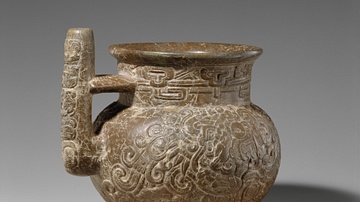
Maya Spouted Jar
This spouted vessel is one of the most elegantly sculpted stone containers in the corpus of Maya art. Its form with the vertical spout parallel to the central axis of the main chamber is known from the late 1st millennium B.C...

Image
Olmec Celtiform Ax
Jadeite celt, 10-4th century BCE, Mexico, Mesoamerica Metropolitan Museum of Art About 1000 BCE, celts-elongated, elliptical ground stone tools-would acquire meaning beyond their workaday function. When made of greenstones...

Article
Ancient Egyptian Agriculture
Agriculture was the foundation of the ancient Egyptian economy and vital to the lives of the people of the land. Agricultural practices began in the Delta Region of northern Egypt and the fertile basin known as the Faiyum...

Article
Sources of History
History (from the Greek ἱστορία, meaning 'a learning or knowing by inquiry') can be broadly taken to indicate the past in general but is usually defined as the study of the past from the point at which there were written sources...

Article
The Aztec Calendar
The Aztecs of ancient Mexico measured time with a sophisticated and interconnected triple calendar system which followed the movements of the celestial bodies and provided a comprehensive list of important religious festivals...
Article
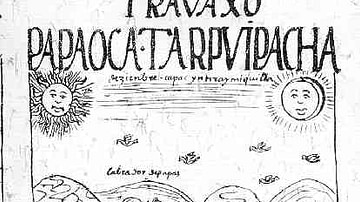
Daily Life in the Inca Empire
Daily life in the Inca empire was characterised by strong family relationships, agricultural labour, sometimes enforced state or military service for males, and occasional lighter moments of festivities to celebrate...
Article
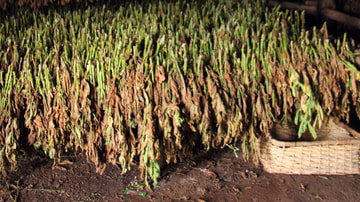
A Brief History of Tobacco in the Americas
The history of tobacco use in the Americas goes back over 1,000 years when natives of the region chewed or smoked the leaves of the plant now known as Nicotiana rustica (primarily in the north) and Nicotiana...

Article
Ten Facts You Need to Know about the Inca
The Inca civilization (c. 1400-1533 CE) is among the most vital of South America in terms of its cultural influence and legacy. The Inca began as a small tribe who steadily grew in power to conquer other peoples...

Article
Inca Textiles
For the Incas finely worked and highly decorative textiles came to symbolize both wealth and status, fine cloth could be used as both a tax and currency, and the very best textiles became amongst the most prized of all possessions...
